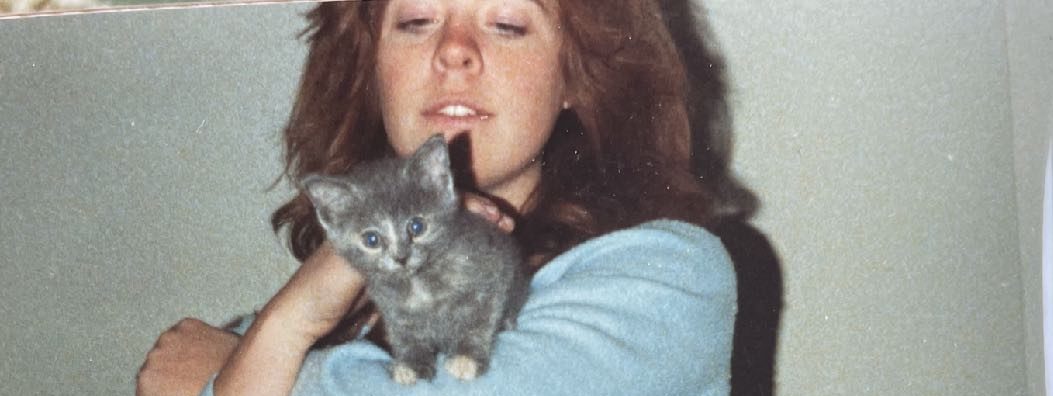
People often confuse me for being callous and cold, both brash and reticent. I’ve been told that I need to be warmer, kinder toward people. Sometimes people read me as angry and standoffish.
What I am, quite honestly, is afraid.
There are many things that hurt me during my drinking years. But very little compares to the night I went home with Todd.
Todd and I had worked together for months – me with my slimy green forks and disastrous termination, and Todd with his bright white smile and ringlets of wavy brown hair.
One night I saw my friend Todd smiling that dazzling smile at a party. And next thing I knew, he and I were walking back to his place together.
After that, things got a bit fuzzy.
I was wasted. This was nothing unusual of course, but on this particular night, I was exceptionally wasted. My liquor level was somewhere between severe double vision and fatal alcohol poisoning. I could barely stay upright, let alone walk. I leaned on Todd the whole way back to his place, stumbling over my feet, his feet, the sidewalk, the grass. I remember laughing.
Then … I remember nothing.
Blackness.
Nothing.
Maybe a blackout…?
Then suddenly I was choking. Something was choking me, something jammed in my throat, blocking my airway. I gagged desperately, begging to breathe. I flailed my head wildly, finally forcing the thing out of my mouth as my eyes flew open.
Todd stood over me, yanking up his jeans and smiling like the Cheshire Cat.
I was lying on the floor on my back and Todd was laughing.
Then I saw other guys – four or five of them – staring down at me, hooting with laughter while Todd looked right into my eyes, grinning and tucking himself back into his jeans.
I tried to focus and figure out what had just happened; I didn’t understand the joke.
But I didn’t stick around to get the details. I leapt up and darted out of the room, dizzy, still stumbling and confused. Their laughter followed me down the hall, out the door, into the cold … and forever.
Todd humiliated me, profoundly degraded me: purposefully, viciously, hatefully, for no purpose that I’ve ever been able to discern. I was nothing more than a languid prop for Todd’s joke.
My instinct, while choking, had been to thrash violently trying to breathe. I found myself wishing my instinct had been to bite down hard, like a vice, and tear that thing to shreds.
The vulnerability and trust that I’d so carelessly offered was shattered that night. Not only could I not trust Todd, or the imbeciles who thought he was funny, but I couldn’t trust … anyone.
But laughing Todd showed absolutely no remorse; he simply never spoke to me again.
I can’t help but wonder how he raised his children. Did he teach his sons to be like him? Is this what he wants for his daughters? The concept of karma keeps me sane when resentment will not leave.
But Todd is not the worst thing that ever happened to me. Todd is just one repulsive thing in a long line of repulsive things that stick in my brain, hanging there, sternly reminding me: I should not drink today.
After I’d been working there for a couple of months, the cafeteria served cake with green icing, a Saint Patrick’s Day special. Green icing was special, and cake was … well, it was cake! So virtually all the students chose Saint Patrick’s Day cake for their trays.
Unfortunately, the cake tasted nowhere near as delicious as it looked.
As if working in unison, the entire population of Mount Union rebelled against the cake by crushing it with forks. I watched as tray after tray glided toward me, each one with a plate containing a piece of smashed chocolate cake and a fork smothered in green icing.
By using forks to obliterate hundreds of pieces of cake, this student protest meant that hundreds of forks had green goo oozing from between their tines.
As plate cleaner du jour, this did not make me happy. My job was to take all of the forks out of the smashed cakes, wipe them clean with a filthy rag, dispose of the cake from the plate, and toss the clean-ish, rinsed silverware into a bucket to be more thoroughly washed.
But on Saint Patrick’s Day, I did not do my job.
What I did instead, after carefully rinsing six or eight forks, is to take the forks, still covered in green icing and cake crumbs, and throw them directly into the garbage can.
I threw away about 147 forks. Then I high-tailed it out to drink green beer with my friends.
The cafeteria had lots of other forks still available, so I didn’t think anyone would notice.
I was wrong.
The next day, I was called into the office. I didn’t even know the kitchen had an office. But it did, and someone I’ve never seen who claimed to be my supervisor asked me to come in.
I had no idea why I was there.
“Tell me how you like your job,” she said.
“I like my job!” I said. I didn’t know what else to say to make this believable, so that’s all I said.
“So tell me what happened last night with the forks,” she said, as casually as she could. It felt more like a question than an accusation, but I still felt a little queasy that she used the word “forks.” I still thought I had gotten away with it.
“Some of the forks were really dirty,” I said. “I didn’t think they could be cleaned properly.”
“So what did you do?”
“I threw them away.”
“You can’t do that,” she said.
“Oh,” I said, genuinely perplexed. “I just figured there were a lot of other forks and we didn’t need ones that were ruined.”
“The forks cannot go in the garbage,” she said. “Last night, someone had to dig through the garbage and pull out every fork you’d thrown away.”
“Sorry,” I said, not actually sorry at all. I hated those forks.
She stared at me for a second. Then she simply stated: “You’re fired.”
My stomach caught in my throat and I started to cry. I may have asked for another chance, but I rightfully didn’t get one.
I’d never been fired before. And to be fired from such a menial job … it confused the heck out of me. It never occurred to me that I’d done anything really wrong. I had a lot yet to learn about employment and taking responsibility for my actions.
It was a very long time before I got fired again, but only because it was a very long time before I got another job.
Living in poverty, which was new and exciting for me, meant that I needed to bring in a little bit of money so that I could go to The Hood and buy my frat party tickets when Larry wasn’t around. Sometimes Bonnie would bounce checks, or pay for the pizza and subs and beer that we had delivered, but it was a good idea for me to contribute even though I no longer got an allowance from my parents.
I had to get an on-campus job. I envisioned myself sitting at a desk in a dorm somewhere, studying or doing homework, or chatting with a guy who stopped by to see me. Instead, since I waited until January of my senior year, I ended up at Slater’s, aka the school cafeteria.
Washing dishes wasn’t something I ever enjoyed. Since I always ate at diners and bars with Larry, I simply never washed anything. Takeout containers went right into the trash, and someone else washed the burger plates at the bars.
But I had to take whatever job I got, and I was put in the dishwashing area. At least I finally got to see what was on the other side of the conveyor belt that transported my cafeteria dishes: a monstrous industrial dishwasher and a few dedicated staff.
I figured I could make plenty of beer and pizza money. All I had to do was show up and do the work.
The people on my new side of the conveyor belt were mostly locals, many with severe mental challenges. They weren’t all students, as I had envisioned. One woman, whose name I have long since forgotten but I’ll call Mary, was particularly memorable.
Mary took her job very seriously. She talked a lot, mostly to herself, loud enough that everyone could hear her. No one ever responded.
One day as the dinner plates were passing through, Mary either forgot to turn on the dishwasher, or forgot to turn on a specific cycle, so that the dishes were only half washed. Judging from Mary’s reaction, one would think she’d shut down the whole cafeteria single-handedly.
“It’s my fault,” she announced loudly to the room. “It’s my own fault.”
Minutes passed. Then she said it again: “It’s all my fault. It’s my own fault.”
She said it again, again, and again. For that entire shift and the next one, Mary told us whose fault it was. For days, weeks and months afterward, seeing Mary conjured the Led Zeppelin song Nobody’s Fault But Mine.
Mary, my colleagues, and I were all shoved into a rather small room around the dishwasher. My job was to clear the plates, dump any paper products and food remnants into a trash can, and separate the glasses, silverware, and dishes. It was a fairly mindless job.
I didn’t care for this work. I was young and stupid, and believed I was meant for better things than touching other people’s disgusting leftovers.
Put another way: I was young, stupid and arrogant, and thought I was better than the mentally challenged people who had to stay there forever. My college education was going to take me places far away from food service.
Fortunately there was one sparkly-toothed bright side: Todd. (Insert dreamy sigh here.) Todd was tall with wavy brown hair and an oversized bright smile. Todd – the only other student in my area – laughed at my jokes, and treated me well. I thought we were friends.
I was very, very wrong about that.
While I spent most of my time drinking with Bonnie, I still had to contend with weekends with Larry – somehow. As long as I could drink (which I could, always, every day, constantly), I was pretty content. But drinking with Larry in a dark bar in Pitcairn wasn’t quite like college.
The one thing I loved about Larry was his ability to play guitar and sing. He was a superstar of sorts in my mind, building a band from nothing anytime he felt like singing. I watched him sit around and figure out new songs on his guitar, which he did effortlessly – although it took a long time – and then he’d practice the song a few times and play it on stage the next night.
I wanted to do that, too.
I’d taken guitar class in ninth grade, and a few private lessons in high school, so I had a small guitar and I knew a few chords. I showed Larry my Stairway to Heaven riff that I’d practiced over the years – having learned it before I ever heard the actual song – and he said, “You can play!”
He didn’t mean I could play well, but he was excited to know I had potential.
Larry showed me that every, single fifties song I ever knew is made up of four chords in a very specific rhythm (G, C, Em, D). Tears On My Pillow was the first one I learned, and I played it a hundred times. I could play other fifties songs, too, but I didn’t know the words to very many of them.
Eventually I started experimenting to see if I could figure out songs on the guitar, too.
One day, while Larry was out, I sat in that tiny apartment with my guitar and figured out how to play I Honestly Love You. I have no idea if I did it right, but whatever I figured out, I practiced until my fingers were beyond calloused and sore; they were practically bleeding.
Conveniently, I still bit my nails all the time so there was no worry about fingernails in the way of my chording.
After a few days of practice, I shyly announced: “I have something to show you.”
“What’s up, Baby?” he asked, sitting at the bottom of the bed where I’d been sitting for hours.
Convinced that I loved Larry more than life itself, and that I would create my own little form of superstardom, I played the entire song – three verses and the bridge (which was quite likely incorrect) – and sang to the 37-year-old biker that I honestly loved him.
I sang it quietly, way too quickly, and much too shyly to be a declaration of love. It was more a declaration of “maybe I can sing” in a humble, confused sort of way.
It’s the only time I ever learned a song in order to play it for Larry. I deemed the song meaningful enough, in a sense, to thank Larry for taking me in, keeping me fed and full of alcohol, and giving me a place to stay for so many months.
I got a little choked up in my anxiety.
And Larry almost – but not quite – cried. Like a proud parent, he told me the song was great, and that I sang it great; he encouraged me to keep playing.
I felt like I was 12 and he was 65. But I felt proud of myself, too.
I hadn’t planned to do any more than play that one song in that one room. But much later, I did more.
In my four years at Mount Union, one day every year stands out as being my absolute favorite: Snow Carnival.
After one particularly prolific snowstorm, all classes would be canceled; we’d have Snow Carnival instead. Students would flock to the quad to create snow sculptures, build igloos, have snowball battles and flop around making snow angels.
During my first two years, I participated with all of my vigor. I am not an artist and I have very little skill when it comes to snow, but I had a blast, surrounded by friends and sorority sisters, all of us freezing cold and laughing … then to the caf for hot chocolate with marshmallows.
On Bonnie’s first Snow Carnival – my junior year – she’d said, “Let me sleep!” So I had – although I felt like half of me was indoors while the other half played games and had fun. I had a good day without Bonnie; later we had some beer delivered to the dorm and spent the rest of the evening drinking, blasting music and pretending it was a weekend.
By my senior year, after they canceled classes we both went back to sleep. We’d both been quite drunk the night before. Unlike the prior three years, I no longer cared that I was missing out on Snow Carnival. My new motto was simple: “Fuck it.”
I had to live this motto or the pain would be debilitating.
But during Snow Carnival senior year, I decided to wake up Bonnie. Her door wasn’t locked, as usual, and I walked in and plopped myself in Bonnie’s chair to wait.
She rolled over, disheveled, and said, “Hey. Ya want a beer?”
“You have fucking beer?!” I marveled. Usually all the beer was gone by morning.
“I think there’s a couple in there,” she said. “Gimme one.”
I opened her fridge and, sure enough, found four beers. It was like Christmas! No classes and beer before breakfast. Of course it was well past noon, so it was a very late breakfast.
Bonnie sat up and cracked her beer. I waited for her to take a sip before I spoke again.
“Want some real snow?” I asked Bonnie.
“I’m not going out there,” she said.
“No, I mean real snow,” I said. “Santa Claus gave me a present.”
Snow Carnival happened to occur the very day after Nick gave me my own vial of cocaine. Suddenly the cocaine-slang word “snow” took on a whole new meaning.
“You are fucking shitting me,” she said. “Give me some right now!”
Bonnie turned up the music to full blast, and we had a day to rival all past and future Snow Carnivals. We ordered steak subs and a twelve-pack of beer. Every so often, we slyly pulled out our illegal drugs and carefully designed small lines on the desk, trying to preserve it for as long as possible. We knew we weren’t going anywhere that day, and we needed the cocaine to last as long as possible – which, we knew, would only be one day. This was our first, last and only personal cocaine party.
People ran down the hall past the door of Bonnie’s room, whooping and hooting and loving life, sometimes knocking and wandering in, causing us to panic and cover the lines with a mug – then, eventually, to lock the door to keep out the unruly.
At the time, we thought we ruled the world.
Looking back, we missed the greatest day of the year and never left the room.
Nick – our Santa Claus – was a regular at The Elm, so Bonnie and I went there all the time.
We were daily drinkers by then and we wanted to be daily cocaine users, too. But we didn’t want to be arrested, and we didn’t want to splurge for the extreme amounts of cocaine we desired.
Nick was sweet, quiet and shy around us, like a high schooler who had never bloomed. Fortunately Bonnie and I talked enough for all of us, and we adored Nick.
Nick had a sweet spot for me, and he obviously had tons of cocaine, so it was a win-win situation. I would have done anything he asked, but he never asked for a single thing.
Nick brought me back to the dorm one night, in his car and without Bonnie. I don’t remember why but I found myself at 3 a.m. smuggling a male into my room, again, risking ramifications of social probation because there was still cocaine left in Santa Claus’ little brown vial.
I don’t know where Nick got the money, but a vial of cocaine cost about $100. For Nick, Bonnie and me, it lasted one night. Or so it seemed.
The night Nick drove me home from The Elm, I figured he wanted to sleep with me. It was rare that guys came home with me for any other reason. But Nick, who was at least as old as Larry, had other plans.
Like me, Nick just wanted to do cocaine. We were both wired but tried to be quiet so as not to be caught. I played quiet music – Alison Moyet’s Alf album – and did lines that Nick splayed on my desk. When the second playing of the album was over, Nick stood up to leave.
Suddenly desperately lonely and afraid, I tried to kiss Nick, hoping he would stay longer, but he didn’t want that.
“It’s okay,” he whispered. “I like you.”
This confused the heck out of me.
So I just walked him to the parking lot. It was snowing hard, and silent.
Nick reached into his pocket and took out a brand new, full vial of cocaine. He picked up my hand, put the vial into my open palm, then closed my hand around it.
“No!” I whined. “I can’t take this! It’s too much.”
It was, quite literally, too much. After all the coke I’d done already, it could have killed me. But the thought of having a full vial of cocaine to myself was beyond exhilarating; I couldn’t imagine anything better in the entire world.
“Take it,” he whispered, giving me a brief, awkward hug. “I’ll see ya later.”
So I pocketed it and watched him drive off.
I covertly moved the cocaine to my room where I stared at it, feeling guiltily ecstatic like I’d just successfully robbed a bank.
I recalled that night long ago, after The Firm concert, when I’d held my head out the window gasping for air, believing my heart was going to explode.
I opened the bottle anyway.
I used the little included spoon to do one hit from my very own cocaine bottle. After inserting some into my left nostril, I did another one on the right.
It was mine.
My heart was pounding; in addition to being wired, I was terrified.
I put a little coke on my finger, tasted it, wiped my finger on my gums. I wanted to have this forever.
I put it way in the back of my desk drawer, behind my pens, push-pins and post-its, and closed the drawer tight.
I can’t figure out why I don’t want to write about Bob and Nick.
Maybe it’s because I so loved Nick, our sapling Santa Claus, and I’m so sure (now) that he was married and that his grand gestures of giving me cocaine even though I didn’t sleep with him … well, that was just nobility, not guilt, causing that.
Maybe it’s because Nick was so shy and careful and because he treated me like a friend. Maybe it’s because I used him so obviously for his cocaine and never even knew his last name and he could have died and I wouldn’t have even known.
Maybe it’s because of Bob. Maybe it’s because Bob was the first consistent Black man in my life, unless you count Tyrone from high school. Bob was more brazen than anyone I’d ever known, even Larry.
Maybe Bob was the reason that my ex-roommate Donna said – and I quote: “At least my parents won’t let me date niggers,” ending our friendship forever.
Yes, really she said that.
But I didn’t date Bob, nor sleep with him. I’m pretty sure he was married too, because sitting for hours with two college-aged girls in his two-door Accord … well, that had to be enough guilt already. Bob never made a move on us, but he constantly talked about sex.
In order to obtain cocaine, Bonnie and I were willing to answer Bob’s questions. Maybe I don’t want to write about Bob because he asked me which finger I used to masturbate, which I proudly said was none of his fucking business.
But then I told him anyway and it makes me gag a little just to admit that. I got another blast of coke for that answer.
Maybe I don’t want to write about Bob, but I need to tell the finger story to explain why I didn’t like Bob and still like Nick to this day, even though they’re probably both dead, like Bonnie and I should be.
Maybe it’s because our name for Nick was Santa Claus – Saint Nick, get it? And Nick was a true saint who gave out cocaine like it was candy, to me at least. And once I tell the story of Nick, then the idea of Santa with the cocaine is gone forever.
Maybe it’s because these were the last good times with Bonnie, and maybe once I write about the good times, then they’re really over, just like the bad times wane when I write about them.
Hanging out with Bob and Nick … this is where my year went poof! up in smoke.
Maybe it’s because this was almost the end of college, and I don’t want to let go of the good memories.
Maybe I don’t want to write about Nick or Bob because I’m getting to the place in my story when I started giving away more of myself than I wanted to give, and maybe that’s what I don’t want to admit. Maybe this is when the tides really turned. Maybe this is when I went from being a happy-go-lucky sorority girl to a sleazy barfly.
Maybe I don’t want to write about Nick or Bob because once I write this, the story turns and I’ve crossed that line and it’s all downhill until the inevitable crash.
Maybe it’s because it’s sad that hanging out with two dirty old men were some of the happiest times I had during senior year, and all I remember is the incessant, insane craving for their cocaine.
One night, Bonnie and I went into a bar bathroom together – as we often did – and discovered a white, powdery substance lying neatly in a line.
It was on the toilet tank, as if someone had forgotten to snort it.
Bonnie and I saw it immediately; we both stared at the powder.
“Do you think it’s for us?” Bonnie asked, incredulous that something so valuable would be lying there forgotten.
“I don’t know!” I said. “Maybe?”
“Let’s just do it right now!” She looked at me for reassurance. I wanted it so bad but ….
“Wait,” I said. I was worried – not about the repercussions of doing someone else’s coke, but about the possibility of death. “What if it’s not cocaine?”
Bonnie had already pulled a dollar bill from her jeans pocket and rolled it up. She snorted half the line, and handed me the rolled-up bill.
“It’s cocaine,” she said.
I snorted the rest of the line before I’d had time to think too long.
Then, as though we were using a thousand-dollar mirror enameled in gold instead of a toilet tank, we wiped up every speck of cocaine from the back of that toilet. We used our fingers to make sure we got it all – then wiped the excess coke on our gums, as is customary, and licked our fingers.
When we were sure there wasn’t one dust speck left on that toilet tank, Bonnie and I started to walk out of the bathroom – and then remembered we’d gone in there for a different reason.
As Bonnie used the toilet she said, “Let’s act like we didn’t see anything; we don’t want someone getting mad because we did their coke.”
“They’re going to know!” I whined, paranoia from cocaine creeping in.
“They won’t know it was us,” she said, confident. Bonnie always believed she could get away with anything – and I felt better when she felt better about things. She was never afraid.
“Okay,” I said, taking my turn on the toilet. “We’ll just act like we were in here using the toilet.”
“We were in here using the toilet,” she said. “See?” She laughed at me, literally using the toilet while fretting.
And that settled it.
No one even looked at us as we ventured back into the bar. We’d gotten free cocaine from who-knows-who, and no one was the wiser.
That night, Bonnie and I wandered into the bathroom several times. We only got the one free line, but we kept checking anyway. It never happened again.
But this led to a pattern of bathroom usage that haunts me to this day.
Every time I went into a public stall from that day forward – for many years, in fact – I locked the door behind me, knelt down on one knee, and checked to see if there was any cocaine on the toilet tank.
Sometimes something would be there.
I could see, through my drunken vision, that there was a powdery substance there – sometimes in a pile, sometimes more spread out, as though someone had blown the line around on the back of the toilet.
So I would take my fingers and wipe up every tiny bit of that “powder,” licking my fingers until I was sure I ingested whatever was there – in case it was cocaine.
For years, I did this.
I am certain that what I was licking up was dust, dirt, dead skin cells, clothing fibers and whatever else might make its way onto an extremely unclean toilet tank.
But I wasn’t taking any chances on missing out on leftover cocaine remnants, just in case.
Taking the truck back to college – leaving Larry to drive the motorcycle to work in the snow – made it easier for Bonnie and me to venture off campus and drink. Bonnie and I wanted very badly to see the world, go places, do things – expand our horizons from Mount Union College to regions beyond.
When The Rose got boring, we started going to The Elm – another biker bar. The Elm was a place we’d visited with Larry, when it was quite dull. People ventured out of the back room and stared at us, but no one conversed. There were only a handful of people in the front room. It was fine – but not as fine as when Bonnie and I showed up by ourselves.
Two young girls walking into the front room brought people out of the back room in a heartbeat. We met a ton of people, many of whom invited us to go into the back with them. When we finally decided it was worth the risk, we followed a guy into a whole other bar. There were pool tables and long plastic tables and a vat of chili always cooking. There was a second jukebox in the back room, and the biker clientele that had wandered through the front room periodically hung out grandly and raucously in the back room.
When Larry sat with us, no one approached us. But when he was gone, Bonnie and I made many new friends.
Best of all: our new friends seemed very fond of cocaine.
We saw the clues instantly: five or six people going into a one-person restroom; someone at a pool table leaning way over with their face near the wood; a couple of bikers huddled together unnaturally in a corner; an empty table suddenly surrounded by people tapping their credit cards on the plastic; half a dozen people leaving by the back door – and coming back four minutes later.
We’d finally found our place.
On our first trip to the back room, we sat around and waited for someone to offer us cocaine. The bikers mostly stayed with their own – since most of the guys already had a “chick” attached to their sides – but there were stragglers who weren’t bikers – including the guy who’d brought us back there – who were willing to share their stash with the poor college kids.
It was hard to tell if they were trying to keep the illegal drugs hidden from the bar staff or not, since it was so obvious, but we often crammed into a bathroom to do lines off the sink or the back of the toilet. We didn’t care how we ingested the stuff – only that we got as much as we could for as long as possible.
We never once paid for it.
But sometimes we’d go to The Elm and no one would discover us sitting in the front room, and we didn’t get invited to the back room. On those days, we drank a couple of beers and then went to The Hood.
Eventually, though, we found Nick. Then we found Bob. Both of them – although they did not hang out together – became our new best friends at The Elm.
Some historical events are so big in scope and significance that most people who lived through it remember where they were when it happened. I remember where I was during 9/11, of course. I also remember where I was the first time I experienced an earthquake, the day I learned that Jerry Garcia had died, and the day the Space Shuttle Challenger exploded in mid-air.
The Challenger flight is the only one of those that happened during my active alcoholism.
I have no idea why I was home from college on a Tuesday in January. Perhaps it was a long weekend that I’d lengthened into a longer weekend, but I know I was in that tiny twin bed in the Pitcairn Hotel when it happened.
I know because I was busily sleeping through it when Larry and Danny burst through the door and woke me up.
“Wake up, Baby!” Larry said urgently, shaking me with one hand and reaching for the television with the other. The roar of static filled the room immediately.
“Turn it off!” I groaned, rolling over to face the wall while Larry played with the rabbit ears.
“Get your ass outta bed!” Danny said. “It’s fuckin’ noon!”
“Fuck you,” I said.
“C’mon, Baby, you gotta see this!” Larry said again, sitting down on the bottom of the bed, still messing with the rabbit ears. The white noise had calmed into the staticky voice of a news anchor.
“See what?” I said, my head throbbing and the tiny light from the tiny TV agonizing me.
“It blew up!” Larry said.
Danny echoed, “It fuckin’ blew up!” Now Danny was sitting on the bed, too.
“What fucking blew up?” I said. I was not an avid follower of space exploration.
“The Challenger!” Danny said. “The fuckin’ Challenger blew up!”
I squinted at the TV between the backs of Danny and Larry. “What’s a Challenger?” I asked, now a little curious.
“The fuckin’ space shuttle!” they said simultaneously.
I had very, very little knowledge of current events; I only watched the news if it came on at the bar and someone asked to have the volume turned up. Then I usually tuned it out immediately. I didn’t follow sports. I didn’t follow politics or international happenings. The news was not something I cared about at all. I didn’t even follow the weather. If it wasn’t MTV, I wasn’t interested.
But someone must have asked to have the volume turned up in a bar at some point because I had a sneaking suspicion that I knew something about a space shuttle.
“The one with the teacher?” I croaked quietly.
“The one with the fuckin’ teacher,” Larry confirmed. He turned up the staticky announcer and tried to see the nauseatingly repeating video on a black-and-white television with virtually no picture.
I closed my eyes. In my heart, that teacher was every teacher I’d ever loved: my beloved fourth grade teacher who told me I could write; my beloved sixth grade social studies teacher who taught me to keep an open mind; my seventh grade English teacher who taught me how to do research; my college creative writing professor who showed me how to connect with myself.
I didn’t want to watch the Challenger blow up over and over again. I wanted to pretend it never happened.
“Turn it off,” I said, knowing they would watch the explosion, fascinated, for at least another hour, which is exactly what they did.
I had nowhere to hide. I lit a cigarette and stared with them at the tiny screen, trying to stay numb.