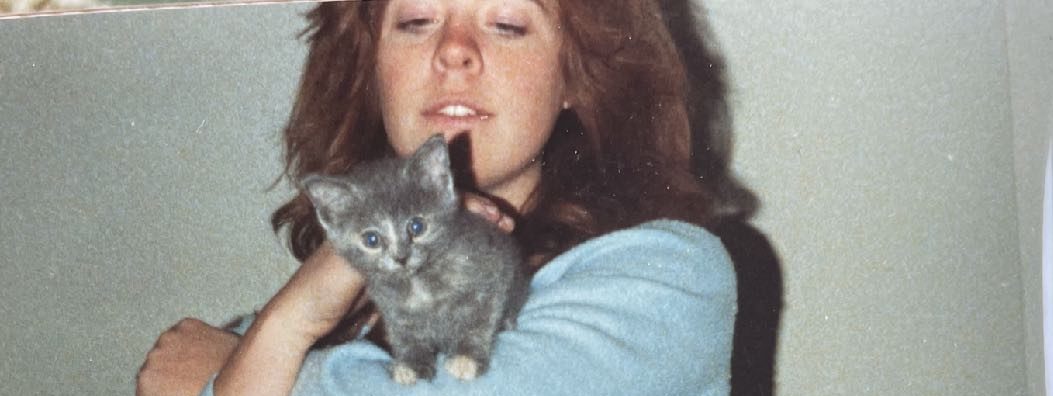
My life outside of work consisted of only one commitment: I was supposed to go to an AA meeting every day. There were plenty of meetings in my area, one every night – sometimes more than one – all within 15 minutes of my apartment.
I would get home from work around 6:00, eat some pasta with Prego or Ragu (depending on what was on sale) and then head out for an evening meeting. I arrived a bit late every night, and left a bit early, because I didn’t really enjoy talking to people. I had no idea that the key to recovery is, actually, getting to know the people in the meetings and talking with them about my day. (Yes, it’s really that simple.)
I was depressed because I no longer had Don or Keisha or any of the other people with whom I connected in rehab. I was as angry at Gregg for the phone bill as I would have been if he’d cut my eyes out instead of just having phone sex. My emotions were dramatic and raw and vacillating but when I went into a meeting and sat down, I felt peaceful. I was distracted enough by people’s stories that I didn’t feel that rawness for a little while.
One gorgeous spring day, I walked to the 7-11 for cigarettes. As I was strolling barefoot in my cutoff jean shorts across the parking lot, a guy in a car slowed to a stop in front of me. His window already down, he leaned out and called, “Hey!”
He was handsome: sweetly smiling, his bleached-blond hair draped over sparkling brown eyes.
Without any courage from alcohol, I was not only shy but confused. Why is he talking to me?
“Hey,” I squeaked as a form of reply.
He continued to smile, his bright eyes scanning my whole body. “Ya wanna get high?”
The question existentially knocked me over. I wanted to go with this boy in the worst way. But did I want to get high? Did I?
Oh my god! I thought. I don’t actually want to get high! The thought of deadening my emotions on this beautiful spring day was abhorrent.
So, for the first time in my life, I looked at a beautiful young man and I said something I’d never said before.
“No thanks,” I said.
“Are you sure?”
“Yeah.”
“Okay,” he said, and drove off as casually as if he’d just asked for the time of day.
I told that story at a meeting, and it felt good. I felt good. Things were good. I was nervous and socially awkward and confused about a whole lot of normal adult things, but overall: I was good.
It wasn’t long before people started to announce social events – things I could do on the weekends without alcohol. I went to an AA roller skating event where I met a guy with one arm. I called him “Larry With One Arm” because he had that low raspy voice and looked old and scraggly.
But Vince was not like Larry at all. Vince was brilliant and philosophical and taught me all the things I should have been learning in AA with my sponsor.
I’d chosen my sponsor because she frequently said “fuck.” I never called her. So Vince was a godsend for my mental health.
Then I went to a 4th of July AA picnic, which was a huge step for me. I wanted to make friends.
At the picnic, I saw a guy who walked exactly, identically, like The One from college.
I instantly fell in love.
I continued working for The Carnegie Museum of Natural History after rehab. My colleagues welcomed me back with open arms. Nobody judged me; everyone was supportive. It was weird. These people loved me almost as much as I loved them.
I had some fantastic run-ins at The Carnegie with celebrities. One Monday, when the museum was closed to the public, Mick Jagger and Charlie Watts toured the museum. Word traveled fast that they were there. I raced out and hovered one floor above them, heart hammering. Then I ran downstairs to casually breeze by them, three feet away, without saying a word. Mick looked at me with a half-smile on his face and I caught his eye, then immediately dropped my gaze. Inside I was screaming: MICK JAGGER MICK JAGGER MICK JAGGER! I love Mick Jagger.
Another day, a film crew went into the department next door, Entomology, to film some butterflies. The entire floor was shut down to make way for the huge cameras and all the crew. Later that day, I was smoking in the lounge (back when they had smoking lounges) and a slew of strangers swarmed by. My eyes were drawn to a woman who, while shorter in stature, seemed to walk a full head taller than everyone else. She turned her head just long enough that I recognized her: it was Jodie Foster cruising past. They were filming a scene from Silence of the Lambs.
I also remember talking to “Tom” – not a celebrity, but Carnegie staff.
I was fresh out of rehab and everyone seemed to be proud of me, so I thought I should be proud of myself, too. I shared my story freely with everyone.
One day, I walked into Tom’s office (though I can’t remember his real name) to deliver a document of some sort. As I stood there chattering I casually announced, “I’ve been sober for six weeks!”
Tom’s jaw dropped. A second passed. Finally he said, “Could you shut the door, please?”
I barely knew the man, and this was my first visit to his office. I asked, “Why?” as I swung the door shut behind me.
“Just close it, thanks,” Tom said. “Six weeks, huh? Do you tell everyone you have six weeks?”
“Well not everyone,” I said. “It doesn’t always come up.”
“Good,” said Tom. “It’s probably better if you don’t tell very many people.”
“Why?” I was stunned.
“Because maybe not everyone is going to be understanding,” he said.
“Oh everyone’s been great!” I said. “Everybody in my department thinks it’s wonderful!”
Tom smiled. “Good,” he said. “I’m glad to hear that. But you might want to be careful.”
I considered this. I had no idea why I should be cautious when announcing my alcoholic tendencies. After all, I was sober now! My life was going great!
“I don’t really think I should worry about it,” I said. Then I had a thought. “Did I offend you somehow?”
Tom smiled again. “No,” he said, hesitating. “I have three years sober myself.”
I practically leaped at him. “Oh my god, congratulations!” I yelled. “My work people are sober, too! That’s amazing!”
Tom shook his head. “Thanks,” he said. “But just be careful who you tell. Do you go to meetings?”
“Every day!”
“Maybe just tell people at meetings,” he said. “Just in case.”
“Just in case what?”
“In case not everyone is so understanding,” he sighed. “But thanks for sharing your news with me.”
“Okay!” I said. “See you later!” I felt like I had a secret.
And I tried to be … quieter about my sobriety.
When I was in rehab, my parents visited me on every family visitation day. My extended family sent me cards and letters. They sent me flowers and stuffed animals and more cards. This was before emails or smart phones, yet every day brought something new and wonderful from my family.
Debbie, my friend from college, had always had hope that I’d recover; she sent me two cards during my stay. But my other “friends” didn’t notice my absence. Most just kept using. Bonnie – my supposed “best friend” had no support to give.
The people who drank the way I drank didn’t actually want me to get sober. Some of them ended up getting sober; some went on to die of alcoholism. Some are still drinking excessively decades later.
None of them were in touch with me during rehab.
My therapist didn’t acknowledge my stay. For 31 days, I heard nothing. After receiving so much support from my family, I didn’t understand it. I’d only gone into treatment because Dr. C said I had to stop drinking in order to continue seeing him – but while I was in rehab? Crickets.
I went to exactly two therapy sessions after rehab, announcing that his lack of support infuriated me. I felt like I’d paid him to be my friend when obviously he wasn’t my friend at all. So I quit therapy with Dr. C – and landed in therapy with at least five other female therapists over the next ten years.
But my family? They were the most supportive, loving, wonderful people – even from afar – even after all that I put them through, after all those insane escapades when they were pulled into the riptide, after all those months and years of pain, not being able to do anything to help. My family saturated me with love, and I felt like I’d been reborn.
When I got out, they continued to support me. I was invited to family reunions and picnics, holiday dinners and shopping sprees. I got letters and cards in the mail. Sometimes, just when I thought I wouldn’t survive another minute sober, a card would appear and I would think, Well, for my family I can probably make it one more day.
And so I did. I would head off to a meeting – often walking in bare feet for miles, because it was summer. And I would sit in the back of that meeting and listen while people described my life – as they told their own stories.
No one was happier that I was choosing a new way of life than my parents. For some reason, in spite of all my prior attempts at getting sober, my parents had hope. They invited me over for dinner on several occasions, and I cherished this time. I felt like I’d come back from the dead. We practiced using our “I” statements (learned in rehab) to communicate, which was helpful in making sure we didn’t overtly irritate each other.
My mom and I talked almost every day again, like we had when I was in college. She listened, and I talked, and she listened some more. No one listens like Mom.
And after our dinners when my dad would hug me, he’d sneak money into my hand, my pockets, anywhere he could. He did this for months before I stopped him and said, “Thank you, but I know you love me. You don’t have to give me money to prove it.” Dad hugged me again, kept the money, and we moved forward into a more adult relationship.
I felt supported, appreciated and overwhelmingly loved.
The rest of rehab had its ups and downs. I recognized that I had a purpose for being there – to learn, and to follow the rules. I didn’t like the rules; I have never been a fan of authority. But I enjoyed the groups, I loved the people, and I became vulnerable enough, finally, to be happily sober for 31 days.
My graduation from rehab was terrifying. I’d made a home for myself there. I didn’t want to leave. Everyone assured me that if I went to meetings and got a sponsor, I’d be fine. But I liked the people I met in rehab; I didn’t want to find new people.
Rehab suggested that I transfer to a sober living facility to keep me free from old triggers, but I declined. I had an important job at The Carnegie. I had to go home!
Also, Gregg was waiting for me. I didn’t know what to do with Gregg, since he was my only friend and I also detested him. I’d asked him not to visit me – which worked out fine, since he didn’t have a car to drive. I’d taken my car keys to rehab, so he couldn’t drive my beloved Bug.
I called the night before I left rehab and alerted Gregg to clean up the place and make sure that my tiny apartment had no alcohol or drugs. He assured me that he would do that. My guess? Any mood-altering chemicals that were around after I left had already been consumed in my absence.
Gregg had been taking care of Kitty, and I was happy he’d been there for her. He ran to meet me on the street, under the guise of helping me with my stuff. I had one bag, and I could carry it fine myself, thanks. He gave me a big hug and spun me around.
I really just wanted to see Kitty.
Upon arrival, I looked around. Everything was in order – no drugs or alcohol, and sadly no cigarettes since Gregg had smoked all of those, too. I gave him five bucks to go get me two more packs.
While he was gone, I opened my mail. I had a lot of junk and a bill, so I opened the phone bill first. Inside the envelope was the highest bill I’d ever received – more than $50! I was stunned. I flipped through and found several phone calls to places with monikers like “SEXY PHONE CHAT” and “900 WOMEN XXX.”
When Gregg returned with my cigarettes, I’d already thrown his stuff into a grocery bag. I waited for him outside, the bag on the ground.
I had not learned to curb my anger.
I ducked my head and ran at Gregg like a football player trying to make a tackle, bowling into him and bouncing backward. Then I swung my fists at his face, screaming obscenities like “FUCKING PHONE SEX!” and “FIFTY DOLLARS!” … hoping to land a blow and break his nose.
Gregg barely flinched, finally pinning my arms and explaining that he had just been lonely while I was gone, and that he would pay me back just as soon as ….
“GET THE FUCK OUT OF MY LIFE!” I screamed.
Gregg unpinned my arms and looked down at me. Then he turned and walked away, never to return.
I ran into Gregg about a year later, after I’d heard that his dad died of alcoholism. I told him I was sorry and hugged him, because I was sorry. I always felt sorry for Gregg.
Finally, though, Gregg was out of my life.
Just when I thought I was really starting to understand things about myself and my drinking, I was blindsided and dragged into an administrative office to have a personal chat with therapeutic staff.
“You need to dress more appropriately in here,” they said carefully. “If you are going to continue wearing tank tops, you need to wear a bra under them.”
“But the straps will show,” I said. “And I haven’t worn a bra in years! I don’t even own one.”
“You’ve got to follow the dress code,” they said. “We can provide you with a bra, or you can stop wearing tank tops.”
“But everything is covered!” I wailed. “This is how I dress!”
They reiterated their point, then sent me to my room put on a t-shirt over my tank top.
I was furious. I’m finally sober and they’re trying to change me! This felt like high school. Worse, it felt like they had rejected me. Rehab had rejected me!
So I left.
I walked out of my room, down the stairs, and out the back door. And I just kept on walking.
I stormed off the hospital grounds and came to a steep, dirt hill that led straight down into a lush green forest. I skidded down the hill, figuring I’d eventually find a road and hitchhike to somewhere.
My thoughts burned my brain: They want me to change who I am! I should be able to wear what I want. I should be accepted for who I am! I’ve never been accepted for who I am. If they can’t accept me at rehab, I’ll never be accepted anywhere. I hate this place. I want to die. I have no reason to live! There’s sure no reason for me to quit drinking. I will never fit in.
As these ever-familiar ideas churned, I skidded downhill like I was skiing. Eventually I hit the end of the dirt and was thrust into trees and brush as far as I could see. I stomped through the woods, cracking sticks with my shoes – they made me wear shoes! – whacking branches out of my face, fuming inside and surrounded by nothing but leafy green outside.
A fallen log provided me with a good stopping point. I sat down on the log and buried my head in my hands. What am I going to do now? Rehab was all I had!
When I stopped seething, I lifted my head. WHOOSH! Something fast and brilliantly blue whizzed right past my head.
What the heck was that!
Another one whooshed by. It was a bird! A really bright blue bird. A bluebird! There were dozens of them! Flying blue dots sparkled around me. As I watched, I saw yellow ones, too – goldfinches! – their beaming yellows just as bright as the blue ones. I’d had no idea these birds existed and here I was, enveloped by their sudden, spectacular brilliance, their songs finally hitting my ears.
I breathed. Suddenly the world felt magical.
Surrounded by nature’s version of a laser light show, I gaped, holding my breath. Humbled and moved almost to tears by this beautiful display, I remembered God. It was impossible not to feel accepted, loved, even treasured among all this beauty.
Maybe I hadn’t been rejected by the world. I’d just been told to change my clothes. Maybe my life wasn’t over after all. Maybe someday I could be included in this magical place.
Eventually I emerged from the woods, lighter somehow, and climbed the enormous hill back to rehab, where nobody seemed to have even noticed that I’d been gone.
It took me a minute to settle into rehab and recognize that we were actually working on ourselves. I wasn’t there to find a husband or to make new friends. I wasn’t even there to stay out of the bars and away from drugs. I was there to learn how to stop drinking.
I still didn’t know exactly how that worked because, it seemed, after 28 days I would graduate from rehab and I would have nothing to do except drink beer. My entire adult life, all I’d done is work and drink and do drugs. What else could there be?
Fortunately there was no way to be in rehab without learning about the multitude of 12-step programs that were available to me outside the doors of rehab. I could go to Alcoholics Anonymous, Narcotics Anonymous, Sex Addicts Anonymous, or even the brand new Cocaine Anonymous. I remembered those really fun stories and laughing aloud at my first three AA meetings and determined that I wanted to go to all the 12-step programs.
It never occurred to me that there was more to it than laughing about someone losing her car. This, I guess, is why we did so many therapy groups.
“Group” lasted all day, it seemed, with breaks for food and cigarettes. And I looooved “group.” In group, we sat around in a circle talking about the things we’d done, where addiction had taken us emotionally, physically and mentally, and why we started drinking and drugging in the first place. I enjoyed talking about my inability to adapt socially to a world where everyone was normal and I was weird.
But listening to the other people in my group talk about their experiences…. That woke me up.
For example, we were supposed to share the worst thing anyone had ever said to us. I said: “My mom told me I was the most selfish person she’d ever known.” Though I was horrifically selfish, this felt like a knife in my gut when she said it.
Then Alice told her story. “My dad took me out to the garden and pointed at all the weeds growing between the flowers. He said, ‘Alice, you’re just like these weeds. You’re disgusting and suffocating all the beautiful flowers.’ He started ripping out all the weeds and said, ‘You belong on the compost pile.'”
My jaw dropped. All the other “worst things” were worse than mine. Being selfish didn’t seem so bad anymore.
Another time, we talked about the underlying cause of our addictions. I talked about how my uncaring parents had moved me from Maryland to Virginia “right in the middle of 8th grade!” Imagine!
Then Keisha told her story. “My big brother walked me to school in the mornings,” she said, crying quietly. “Every day he pulled me into the bushes to have sex with him.” Keisha started choking, sobbing, and fell out of her chair onto her knees in the middle of group. “I was eight!” she wailed. “I was just a little girl!” Keisha screamed and moaned and wailed. I stared, confused and stunned.
Friendships inevitably happened; we all formed a tight bond. Everyone’s favorite person was Junior, who graduated halfway through my stay. Junior deservingly won the “Most Likely To Stay Sober” award. We all applauded, proud and excited for him to start his sober journey.
We all watched Junior from the rehab window as he got into his friend’s car to leave. Junior stuck his head out the window, holding up his drink to say “Cheers!” as they pulled away.
Junior’s drink? A can of Budweiser.
Don was short with blond hair and glasses. I was still under the mistaken impression that people with glasses were smarter than people without glasses. So I chose Don from all the rehab men and fell in love.
Don taught me how to play chess, and we played during all of our down time. I learned quickly and loved the game. From the rehab library, he acquired a book called The Little Prince, which was just exactly the kind of book that I loved, and told me it was a must-read. He filled my Alcoholics Anonymous Big Book with words of fondness and encouragement, like he was signing a yearbook.
And when we figured out how to pull it off, Don snuck into my room at night to have sex with me. It was against every rule; we could have been thrown out. Since it was over in two minutes, he disappeared without being caught.
On Family Visitation Day, my parents arrived and I introduced them to Don. I saw them exchange glances with each other – a boyfriend in rehab?! – but they just said, “Nice to meet you.”
“He’s so smart!” I told them. “He taught me how to play chess and he gave me this book and ….” I trailed off as Don went to greet his visitor.
Don’s visitor was a 250-pound woman who towered over him by at least six inches. He walked up to her and greeted her with a big hug and a long kiss, which is how I found out that Don had a girlfriend.
Don and the woman were holding hands and smiling goofily at each other for a few minutes before my mom spoke. “Take a look at the person he’s chosen,” she said. “Watch how they interact. It might tell you something about him that you didn’t know before.”
Until that moment, it had never occurred to me to judge my potential husbands by their behavior. I took one look at a man, determined his entire personality by my first impression, and then tried to force a marriage in spite of any glaring defects. I focused on twisting my ideals into relationships, rather than working with the human beings I called “boyfriends.”
Looking back, the men who were good choices for marriage were the ones who were emotionally available, kind to me, and loving, supportive partners. They were the ones I knew before I went off the deep end into alcoholism.
As the years progressed, I sought men who were emotionally unavailable, mentally unstable, incapable of being supportive or even understanding me. Being sick meant that I gravitated toward sickness.
In rehab, and for years afterward, I was still very sick.
After Family Visitation Day, I didn’t know how to process Don. We still played chess but when Don suggested we have sex again, I firmly declined, stating “rehab rules.” While I still considered Don my rehab boyfriend, we remained platonic but flirty until he left – about a week before I did.
Sidelining my “relationship” in rehab was the smartest thing I did while I was there. Surprise! I’d been wasting my time trying to find a husband while in rehab. (What a story for the grandkids!) I started to more fully engage in the multitude of self-help opportunities: support groups, therapy, social groups, reading and games. We were getting to know ourselves, many of us for the first time.
And I needed that. I wanted to care for Young Kirsten, from my dream. I wanted to learn and grow. So I started to pay attention.
Rehab consisted of two parts: detox and rehabilitation.
For me, detox lasted three days. I had my own room and I slept a lot. Food was provided on a regular schedule, and I ate some of it. I left my room and wandered around a bit, wondering how this place could possibly keep me sober. There was nothing to do. I watched TV in the common area.
Zane, a very tall patient with a dark beard, wandered into the common area a few times. He seemed quiet and reserved, as all of us did, as we stared at the television. Once he got up to leave, took ten steps or so, then fell abruptly to the floor. He started to seize violently, foaming at the mouth, eyes completely rolled back in his head.
Staff appeared from nowhere, jostling him about and saving his life.
Later I asked a nurse what had happened to Zane. “Seizure,” she said. “It’s why you’re in detox. We need to make sure you are physically able to go into rehab.”
“I thought I was in rehab,” I said.
“This is just detox,” she said. “Rehab is in another building.” This was news to me. I thought sleeping, eating and watching TV were all we would do.
“Well at least I won’t have a seizure,” I told her. “I mostly just drank beer.”
“Zane’s an alcoholic,” she said. “Never did a drug in his life. Anyone can have a seizure.”
This terrified me. Mere hours later, I was moved into the rehab side of the facility, where I never saw Zane or anyone else from detox. This also terrified me.
But somehow rehab didn’t scare me at all.
We had therapy groups, which I loved, even though I didn’t like getting out of bed at 8 a.m. We had three meals a day, and I scarfed them down. I discovered quite quickly that food tasted better when I wasn’t drinking, and I easily gained ten pounds in my 31 days in the hospital.
There were lots of people in rehab, many around my age. I even had a roommate: Chyna, a small, thin, dark-skinned woman who identified herself as a heroin junkie. She spoke quietly when we were in the room together, and she seemed very nice. But out in the common areas she was loud, very loud, and I didn’t do well with loud. She seemed to have been born with a volume button that automatically went up in large groups. Outside of our room, she seemed feisty and mean. So I didn’t get to know Chyna well.
I felt like I was back in middle school, trying to find my people. In an instant, even with my love for my younger self fresh in my mind, I felt completely ostracized.
So I gravitated toward the people who, I knew, would appreciate me without reserve: the men. The women were like knives in a sack of spoons; they could hurt me if I tried to get close. Rejection by women would have been more painful than my raw, sober self could possibly handle.
I sought the people who would like me simply because of my gender, and I had no trouble getting the attention of the guys in the rehab. I shied away from women of all ages with the exception of Sheila the pot-smoking taxi driver, who was my age, gay, and tough. I really enjoyed talking to Sheila.
Unfortunately for me, Sheila left rehab and relapsed immediately. She did not come back.
I learned quickly. Next, I latched onto a guy named Don.
My parents drove me to Gateway Rehabilitation Center and walked me inside. They reminded me to take things like a toothbrush and deodorant then dropped me off, certainly breathing a sigh of relief that I’d be safe.
I was ushered upstairs alone, a full grown adult who needed to be rehabilitated. They searched everything I brought, tossing out my matches and putting my cigarettes elsewhere. I’d have to ask to smoke.
A woman checked my height, weight and blood pressure. Then she sat down with a paper and asked me some questions.
“How old are you?”
“Twenty-four.”
“What’s your drug of choice?”
“My drug of choice? You mean which one do I like the most?”
The woman looked up from her papers. She seemed to think I was kidding, but I had no idea what she was asking me. It took her a minute to realize I was serious.
“I just read the questions. What is your drug of choice?”
“Well I like cocaine the best,” I said. “But I don’t have enough money to do cocaine. Oh! I love LSD. So I guess LSD was my favorite.”
She stared at me, paused, then wrote something on her paper. “Do you use any other drugs?”
“Well I tried opium, but I didn’t like it. And I used to take pills when I was in high school, but I haven’t done those in years. I hated speed. Actually I used to smoke spices from my mom’s kitchen, before I smoked pot. I gave up pot for years but now I smoke pot, too.”
“Have you used crack, methamphetamine or heroin?”
“I don’t think so, but I smoked cocaine a couple of times. Is that crack?” (I was still wondering.)
“I don’t know,” she said. She scribbled something on her paper. “Do you use alcohol?”
“Oh yeah,” I said. “But I don’t count that as a drug. I thought all drugs were illegal unless they come from your doctor.” Again, I was serious.
“In here, we consider alcohol a drug.”
“Oh,” I said. “Well I drink all the time! It’s legal. And I drink less when I do drugs. I drink every day. Unless I’m working, then I drink after work. I don’t drink at my new job.” I didn’t mention the times I drank at my old jobs.
“What kind of alcohol do you drink?”
I couldn’t believe she was asking me so many fun questions. “Mostly beer,” I said. “But I don’t really even like beer.”
She looked at me again. “Any other kinds of alcohol?”
“Of course!” I said. “My favorite is kaluha! Oh, but I love blackberry brandy. And schnapps! Root beer is the best schnapps, then maybe peppermint or spearmint. And I love sloe gin, but I don’t drink it anymore. It made my stomach hurt. Do you think that’s a problem? Oh my god, rum and cokes! I drank a million rum and cokes. And vodka, but only mixed with orange juice, not tomato juice. In college I think I drank grain alcohol, but it was some kind of punch and I’m not sure what was really in it. But my favorite mixed drink is a slow comfortable screw, because I like the name. I don’t know what’s in that, though. Mostly, I just drank beer. Do you want to know what kinds of beer I like?”
“That’s okay, I have enough,” she said, pausing. Then: “Alcohol might be your drug of choice.”
“Oh no,” I said. “I like cocaine and LSD way more than alcohol.”
She blinked. “Okay, let’s get you a bed.”
Over the years, there have been a million times that I’ve wondered: why me? Why am I sober and so many other alcoholics are dead? And why are so many obviously alcoholic drinkers still drinking?
I can only answer using my own experience. I tried to get sober on my own and failed multiple times. I could only make it a few weeks without anyone helping me. Then I tried rehab – a jump start that I truly needed, but staying sober was up to me afterward.
I have kicked several addictions now – drugs, alcohol, cigarettes, caffeine – and there is only one thing necessary for me to stop destroying myself. There is only one mindset that “works,” that creates a space in my life for the miracle to happen.
It doesn’t work to pretend. It doesn’t work to “try.” It doesn’t work to move toward sobriety because I think I should. Only one thing truly works.
I had to want sobriety more than I wanted to keep using drugs and alcohol.
I had to want sobriety more than anything. I had to want to be healthy more than I wanted to stay sick.
For years I knew something was wrong. For years I thought about drinking, about how it was killing me, about what it was doing to my life. For years I watched myself deteriorate; I looked into the mirror and saw those dead eyes staring back. For years I wondered how I could fix the problem.
And then, one day, I actually wanted to stop. I wanted to stop more than anything in the world. I was willing to do anything it took to get sober. There were no more reservations.
No more, “But what if I’m not happy?”
No more, “But what if it doesn’t work?”
No more, “But … but … but…”
No. More.
When I started trying to get sober, it wasn’t because I really wanted to stop drinking. I tried sobriety because I had absolutely nowhere else to turn.
Nobody else could save me from myself. I had to give up on “trying” and start actually doing. I’d been trying for years. Trying doesn’t work.
In order to start doing something different, I had to be open to changing everything.
I had to change the thought patterns in my head, to change the behaviors I’d perfected, to change the person I thought I wanted to be. I had to open my mind to the possibility that what I believed – what I’d held onto with a death grip for all those years – was absolutely ineffective and, possibly, just plain wrong.
I had to do what other people told me to do, even though I didn’t want to, and I found my people in Alcoholics Anonymous – although sober people are everywhere in the world. Some people get sober through religion or family or work or therapy.
For me, anonymous support groups were the best way to open up and be honest and still do things my own way.
But no one stays sober who doesn’t really want to be sober.
Getting sober is hard. Staying sober is harder. It requires commitment and change. And really, truly, deeply wanting to change is essential for actual change.
So one day, I wanted to change more than anything in the world. I was done with my old life; it had run its course into the ground just as far as it could possibly go.
Unfortunately for everyone in my world, that psychic change didn’t happen to me until 1992.
I walked into the doors of my first rehab on May 4, 1989.