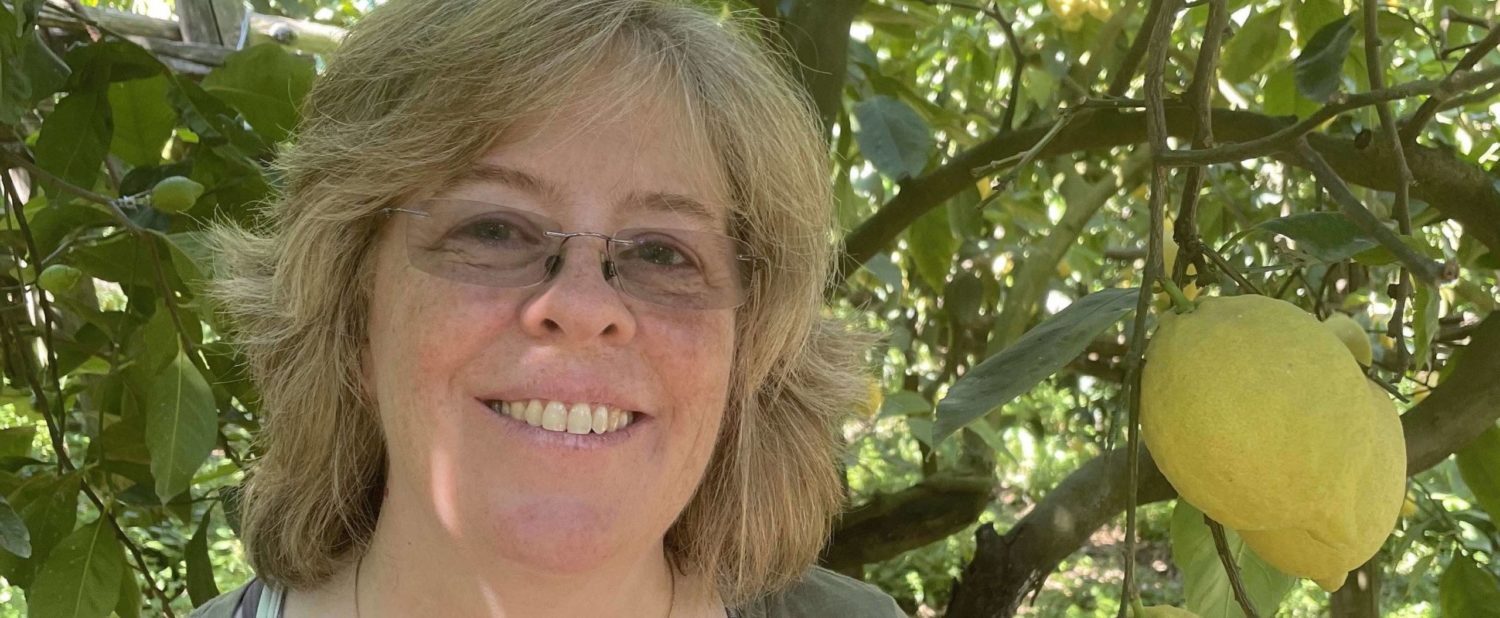
My name is Kirsten, and I’m an alcoholic. Today I have 29 years sober.
I haven’t said much about my alcoholism on my blog, although I have a lot to say. This was supposed to be a parenting blog – and it was, for many years – so I hesitated to mention my alcoholism. People look down on alcoholics, even if we’re not drinking. They sure don’t look to drunks for parenting advice.
Fortunately, I didn’t have children as a drunk. Heck, I even quit smoking cigarettes when I got pregnant – so my children have never known a mom in the throes of addiction.
As a drunk, I was unable to care for anyone – not even myself. I couldn’t function. I just woke up every day in search of a way to stop feeling.
Drinking was my first true love. It was the thing that made me capable. When drinking, I was able to say things I’d been afraid to say, to do things I’d never done before, to step out of the self-imposed shell I’d created between the ages of 5 and 15. Drinking made me funny, likable, happy, exciting and free. It made me feel invincible.
That feeling lasted about two years. I started drinking on occasion when I was almost 16, and I thoroughly enjoyed my rebellious years until the end of my freshman year of college. That’s when things started to go sideways. Somewhere along the line, that feeling of freedom turned into a prison. I don’t know how it happened.
While chasing that feeling of invincibility, I started doing things I never thought I’d do. My morals went kerflooey. I stopped caring about my life, my goals, my school. I just stopped caring about everything except: how can I get another drink?
For the worst parts of my alcoholism, I wasn’t old enough to drink legally. But by the time I was 21, I’d been drinking daily for two years. Plenty of people enabled me back then, especially older men. Thinking back on this time of my life repulses me now – but without the worst bits, I may never have decided to stop drinking.
Spiraling down a bottomless pit is inspirational. And that’s how I ended up in rehab. I finally decided I wanted to stop drinking more than I wanted to chase another drink. I didn’t want to live, but I didn’t quite want to die. Mostly, I didn’t want to live another day staring into the mirror at my starkly barren reflection. They say your eyes reflect your soul, but my eyes were empty.
My first day of sobriety was August 20, 1992. I have lots of drinking stories. I’ve considered writing a book. But really, I just want to say: I am incredibly blessed to have gotten sober. Many people prayed for me, or I wouldn’t still be alive today. I know this. Also I had a clear sign from God (another story) that showed me I was doing the right thing by trying to quit drinking. No one really believes that particular story, but the sign from God was literal.
I am blessed in my life by people who were willing to pray for my health, even when I was suicidal. I am very, very fortunate that I survived the insanity. And I thank God every single day for my life.
Being alive is way better than living like a zombie; I just didn’t know it until 1992. Life is good. Thank you, God, for 29 sober years.
After pouring my heart onto a blog that was, intentionally, three times longer than I normally allow, I had no idea what to write next. Because I still feel pretty much the same. I appreciated all the caring and love from all corners of my friend universe, but I still feel like I’m going to be alone in my own home for the rest of my life.
That said, I have decided that I will be okay with that.
My sons are great. I love them dearly. If there’s one thing I understood from the moment Baby #1 was born, it’s that no matter how they feel about me, I am going to love them unconditionally forever. That love won’t go away, no matter what they do. They may despise me but I am going to always, always love them.
My husband? Well, that’s another story. Because in spite of our vows, he is not blood-related. I could, if I wanted to, get rid of him. There’s a reason that divorce is so prevalent in this country – because literally, spouses are expendable. They don’t come with a warranty and they never live up to expectations.
Marriage is portrayed as a fairytale, all the way up until one is actually married, and then – BOOM! The wedding is over and real life just keeps going on like it always did, except now you have someone in your house who wasn’t there before. And you have to decide what to do with that person – how you’re going to act, what you really want, and how much compromise you can muster.
After my honeymoon, I distinctly remember coming home from work and walking into our darling little cottage in the woods, our heavenly abode. Bill wasn’t home yet and I looked around wondering, Hey! Where are the bluebirds?
Because I honestly expected bluebirds. I expected dinner for two to be on our tiny table, and maybe some talking salt shakers to be dancing nearby. I had seen enough Disney cartoons and happily-ever-movies to know that there should have been bluebirds, twittering around in a circle above my head.
That’s what was supposed to happen after my wedding. Suddenly I expected to find myself transformed into a Disney cartoon.
But – surprise! That is not what happened. I know – it’s unfair. I feel for the people who, like me, spend their entire lives looking for the right person only to find him, marry him, and then, with no warning whatsoever, wake up.
So here I am – 22 official years later – copping to the fact that talking to my husband is often like talking to a brick wall. He doesn’t hear me. I yell and he still doesn’t hear me. In fact, he hears less when I yell. I had to learn this. In addition, Bill has ADHD, so he only ever hears about every fifth word I say. And when I say Bill doesn’t know how to support me, I mean it. He absolutely does not know how.
This realization leaves me with a choice: do I ditch him, and go find someone who can support me the way I want to be supported? Or do I keep him (and his other fine qualities) and learn to support myself?
That’s my follow-up to my out-loud pity party from last week. But honestly? There really isn’t a question here.
Bill is giving this marriage the very best he’s got. And the best he’s got is really, really good.
He’s not perfect. There are no bluebirds (still!) but considering that he’s dealing with me, Bill is about as good a husband as anyone can have. Do I feel unsupported? Yes. Will he ever understand me? No.
But do I love him in spite of all that?
Well…. yes. We’re in this thing together – even without the help of Walt Disney. I don’t know for sure, but I think we’re going to be okay. And instead of working so hard on us, and him, I could do some work on me, since the bluebirds are a myth. In fact, I probably should have done that a long time ago.
I have always known I was weird. It’s hard not to know when my mom – who was one of the popular kids in high school – and my dad – who was a superstar athlete – regularly referred to me as a “square peg.” I wanted, early in life, to insert myself into the round holes of the world, but I just didn’t quite fit. Instead I was bullied and trod upon and ignored. I spent a lot of time with animals, or alone.
Years after I’d grown up, I realized that fitting into a round hole with my square self was unnecessary, and I started to learn that I was okay.
I never really looked for other square pegs. Sometimes I found them accidentally, but for most of my life, I just wandered around being lonely. I thought I was supposed to find a husband, which would make me feel less lonely, so (from afar), I admired every, single boy I saw. Some of them were fictional characters. I just looked at everyone else, searching for someone like me.
I didn’t necessarily like being surrounded by people, ever, but even when surrounded, I have always felt lonely. And today – putting myself on paper for all the world to see, judge, criticize and guffaw – it’s possible that I feel lonelier than I ever have before.
I found someone back in the 20th century who made me feel less alone. He was a square peg, like me. But he was smart and funny and gorgeous and a total loner. I thought being a loner was “cool” and he thought I was cool, so I latched onto him for a few years. Being with him verified that I was okay – not because I was with someone gorgeous, but because the gorgeous man was like me.
Not surprisingly, I was still lonely in this relationship. I hadn’t learned yet to love myself, so I couldn’t be successfully close to anyone. Eventually, we broke up. Almost immediately, he started dating the roundest of pegs – a pretentious, snooty woman who had none of my traits. And I felt unverified immediately.
It was essential that I spent a couple of years alone, working on myself, by myself. It was the only way for me to figure out how to fully be me. I had to be relationship-free. I needed to know who I am without someone standing next to me, reminding me that I was okay. I needed to be okay without anyone telling me: Hey, you’re okay.
Eventually, I learned to like myself. I no longer had to be verified: I was just okay. I was not perfect, but I was a decent human. I had things to offer the world, even though a lot of the people in the world didn’t seem to want what I had to offer. Most people didn’t get my jokes. Most people didn’t get me.
But I got me, and I decided that my understanding of myself was probably more important than their understanding of me – whoever they were – and I built upon that. I determined that I was okay, just as I am – a square peg in a world of round holes, but still okay. I was in my early 30s by the time I realized this.
Then I met a man who got me. Bill laughed at my jokes. And he made me laugh. This may not sound like enough for a solid relationship, but it’s the reason I married him. After almost 35 years, I found someone who was crazy-funny and brilliant, who saw me for who I was and liked me anyway.
Then I had kids – two of them – who liked me, too. They made me feel like I had a real reason for being on this earth. We loved each other unconditionally. I didn’t worry anymore about being a square peg. I was a mom, and that was the most important job in the world.
Bill and I worked as a team to raise the kids. They both had issues. One had issues that were glaringly like Bill’s issues. The other one had issues that were glaringly like my issues. But both kids were perfect just as they were, so Bill and I realized that maybe we were perfect just as we were, too. We were all a little weird, but we were all okay.
And then they were teenagers. Dylan started screaming and swearing at me, whole paragraphs and lectures that said: YOU ARE NOT OKAY. YOU ARE THE ONLY ONE IN THE WORLD WHO HURTS ME THE WAY YOU DO. STOP!
This has gone on for five years. You are not okay, Dylan says, again and again. You hurt me just by being you, he says.
For ten years, Bill has said the same thing. You are not okay, he says. You don’t communicate the right way. You don’t say things in a way that makes sense to other people. You need to change the way you talk to people, he says. You need to change the way you talk to me. You need to change who you are, so that I understand you.
Bill and I stopped listening to each other years ago. I stopped because I was bored with chit-chat. He stopped because he didn’t like what I said. When we talk now, we don’t support each other. We don’t know how.
We went to therapy decades ago. The therapist said, “If you didn’t like each other so much, you wouldn’t be so hurt by what the other person says.” Ten years later we went back to therapy. The new therapist said, “If you would listen to each other, you might get along better.” We quit going to therapy because we both wanted to continuing saying the things we wanted to say the way we wanted to say them.
I turn to God. Every day, I turn to God. I pray: Please help me. Please let me know what to do. I want to do better. I want to be better. Please help me be better.
I don’t know what I can do differently. They tell me I should say things in a different way. I try. I don’t feel like I am criticizing. I don’t feel like I am being cruel. I just feel like I am saying the things I need to say. I am trying to help. When they say I’ve said something wrong, I get quiet. I get defensively silent. If I can’t say anything right, I won’t say anything at all.
But this helps nothing. You are not okay, Bill says. You don’t say things the right way. You hurt people. You hurt me.
You are a monster, Dylan says, now that he is an adult and he can speak freely. You have ruined my life by being you. You were not a good mother. You were the worst mother a child can have. He doesn’t use those words, but he says it again and again and again. Usually he screams it. I have taught him this, somehow. I have taught him to scream because he feels like he is not being heard.
I start to believe – again, after 20 years – that being me isn’t going to be enough. I feel like a square peg in my own home. I pray some more. Please God, I say, if I need to be locked up in an asylum, please give me a sign.
When I reach this point, I always get a sign. Something will go wrong and I will fix it. I will help. I will show that I am a good mom, a good person, a good friend, a good helper. I will do something right, and then I will know that I don’t need to be locked up. It always happens. I always feel good, instead of feeling insane. It lasts about ten minutes.
Or my sign will be that I spend time with a person who is so controlling and egomaniacal that I suddenly feel like a saint. That’s when I remember that Mother Teresa and I share the same birthday, so I must be okay.
I shove down the need to be locked up, and realize that there are plenty of people who are worse than me. I think I am okay. In fact, I am sure of it.
Plus, I still have one reason left to live: Shane. Shane is perfect just as he is, and he’s so much like me. So I must be perfect just as I am, too. Shane is my verification that quirky people are people too. In fact, Shane is brighter, funnier, bolder, stronger, better than I am – but he is a familiar kind of “weird.” His brain works the way mine does, in many ways.
But he’s always had more self-confidence than I have. He’s a square peg who has never tried to fit into a round hole. He just fits in the world. It’s like he came with a pre-made square hole that suits him and the world just fine. He doesn’t have to work at it; he just fits.
Then one day, Shane says: It’s possible that YOU are the only person like you, and that I am actually not like you at all. Maybe I am fine and only YOU are messed up.
And I think, now: Yes, that makes sense. You are fine; I know this. So I must be messed up.
Shane has said it now, too: You are not okay. He said it in the nicest way, but he still said it. And I realize he’s been thinking it for a long, long time.
And then I know: I am not okay. It doesn’t matter if I am a lovable square peg. It doesn’t matter if I am a good, kind, decent human who wants to do better. It doesn’t matter that animals like me, because there are no people in this world who do. It doesn’t matter that I have tried and tried and tried, or that I have prayed and prayed and prayed.
It doesn’t matter that I have given everything I have to motherhood, because I thought it meant that I fit in this big, round world. It doesn’t matter because I wasn’t a good mom. I am – deep down – a flawed and imperfect mom. And I have hurt the people I love, 100% unintentionally, which is worse than hurting myself.
Because I am not okay. Something is desperately, agonizingly, deeply wrong with me.
I understand the Big World, where I don’t fit. I know I am weird. I am off. I don’t get along with people. I know that. For many years, I pretended to be what I thought everyone wanted me to be, and I learned that I was only hurting myself.
So I stopped pretending. I started caring for myself. I spent years discovering – and letting go of – self-destructive behaviors. I wanted to be okay with me. Then I spent more years just trying to learn how to be healthy. I am still desperately trying to learn to be healthy. I gave up drugs, then alcohol, then cigarettes, then caffeine, then gluten. I’ve taken up walking and sports and reading. I’m trying to rebalance my serotonin-screwed brain.
I want to be okay. I want so badly to be okay.
I realized years ago that I didn’t need the Big World to love me. I only needed to do what I could for My Family. I knew that the only thing that mattered is that I was a Good Mom. Because being a Good Mom means teaching other humans how to be kind and decent and strong for themselves, and that kind of teaching has a positive ripple effect on the whole Big World.
So I devoted myself 150% to motherhood. And then I became a teacher, too, because that positive ripple effect could be everywhere if I share it with everyone.
But when Shane said – in the nicest possible way – maybe you are not okay…? That’s when the blinders were ripped off my face and I was suddenly staring into a cesspool at my reflection.
Even after all these years, after fifty-seven years of being me, I still don’t know why I am not okay. I know I have issues. Here are the issues I know I have:
I always want to be right.
I talk too much.
I am too controlling.
My being “helpful” comes across as critical.
I don’t know how to communicate properly.
I don’t enjoy being socially appropriate.
I am too selfish.
I should be more grateful.
I am too negative.
I am not affectionate enough.
I don’t trust people.
I am naive.
I don’t give enough of myself.
I think too much.
I need to live in the moment.
There are more issues, I’m sure. But I can’t seem to fix these issues. No matter how many times people tell me what I’m doing wrong, no one tells me how to do it right. And I am stuck in a house full of people who strongly believe that being me isn’t quite up to par.
I am not good enough, just the way I am. I have to become different, or I will forever be lonely in my own home.
Unfortunately, I can’t wake up tomorrow and be “okay enough.” I am stuck being me. I have gone to therapy a thousand times. I have spent nearly thirty years sober with the resources of Alcoholics Anonymous. I have changed my eating habits and taken supplements to try to balance my brain. And I have read every self-help book known to man, plus a thousand autobiographies of people who, like me, have issues that they’ve overcome.
I always think reading the books will give me just the right insight to become okay. But no matter how fast I pedal, I am still right here. No matter how hard I try, I get nowhere.
You’re not okay, they say. You’re not changing fast enough. You’re the reason our family will never recover. You’re the reason we will never want to be with you when you are old; we will never want to visit you. You’re not okay.
They say.
And I look into the mirror today, into the cesspool that is me again, and I wonder: what am I supposed to change? How can I be less of all those awful things, and more like all you people who fit in the world? How can I be like you, when I am always going to be just like me?
I really thought I was okay. But if the people in my own house believe I am not, then I am not okay.
My choice now seems to be: I can try to be okay so that I fit into my own home, or I can be me and be lonely. And for the life of me, I can’t imagine trying any harder to be okay. After all these years of giving it everything I’ve got, I honestly don’t think I have anything left to give.
Here is another college application essay I wrote as a “sample” for Shane – based on my real-life experience:
********************************
While riding the bus to school one morning, my friend Frances asked if I did my English homework. Ever the conscientious student I replied, “Of course!”
The homework assignment was particularly fun. We’d read Jabberwocky by Lewis Carroll the day before and our assignment was to put actual words into the poem in place of Carroll’s nonsensical words. I’d chosen the perfect logical word for every instance of silliness.
So I beamed with pride when Frances asked to see my homework. She read it as we rode, and gave it back to me when we got off the bus.
Two days later, Frances and I were summoned to stay after class. Our English teacher said that our homework assignments were identical. Unlike a math paper where there’s only one set of answers, Mrs. Wilson explained that this was an unexpected discovery.
I looked at Frances, suddenly realizing that she’d copied my assignment verbatim. She was staring hard at the ground.
I turned to Mrs. Wilson. “I didn’t know she was going to copy my paper,” I stammered. “She asked to see it on the bus but I didn’t know she’d do that.”
“Frances?”
“I did my own paper,” said Frances, still studying the floor.
There was an unbearable pause as the first bell rang, alerting us that we were both going to be late for class if we didn’t leave immediately.
“I guess I have no choice,” said Mrs. Wilson. “Since I don’t know which one of you wrote the original paper, I am going to have to give you both a failing grade.”
Tears sprung to my eyes. I’d worked hard on that paper and this felt entirely unfair. But I was a quiet child, and Frances was supposed to be my friend, so I choked back the tears and nodded.
Naively, I continued to trust Frances. I was new in town and didn’t know her well, but she rode bikes with me in the summertime and she lived on a farm and I thought we’d remain close forever. I didn’t realize she’d later have sex with my boyfriend, get pregnant at 17, and live out her years in that tiny town. It’s likely that she never learned The Golden Rule, which was my internal mantra.
Instead of learning to distrust people, instead I felt pained because that incident was the low point in my academic career, when it should have been a high point. I love to write; I loved choosing each word to “fix” Jabberwocky into a strong, solid, meaningful poem. I loved doing it so much that even after The Great Homework Incident of ’78, I wrote a brand new version of Jabberwocky. This time I used my own nonsensical words, creating a third version of the classic poem with somewhat flimsier words that made different points entirely.
I just loved words. And I got a failing grade after working with words. This reminded me not only to keep my work to myself until after it was graded, but that I cherished writing every bit as much in ninth grade as I did when my fourth grade teacher first asked us to keep a weekly journal. So I hope to keep writing for as long as I possibly can.
Meanwhile, I moved away from Frances and the tiny town. But as I’ve aged, once in awhile, I’ve gone galumphing back.
Shane recently started working on his college essay – but he wasn’t happy with his initial results. I told him, “Just tell a story of something that was meaningful to you.” And then, like any insanely obsessed mother, I wrote several essays of my own – based on real examples from my own life – to show him what I meant.
Fortunately, each of these essays is just the right length for a blog post – so I am posting them all here. God knows Shane doesn’t need them! Thanks for reading.
********************
My favorite hobby is unlikely to be shared by anyone else applying to college. Sure, I’m a voracious reader and especially enjoy books about dogs. I walk my own dog frequently. I play softball and tennis and I love to swim across the bottom of the pool while counting the seconds to see how long I can hold my breath (53 seconds) and listening to AC/DC through headphones gives me an unbelievable thrill. But my favorite hobby is: bulletin board changing.
Surprisingly, some people will not know that bulletin board changing can even be classified as a hobby. However, I guarantee that I have spent more time on changing the photos on my bulletin board than I’ve spent floating across the bottom of a pool.
It all started when my parents said I couldn’t hang pictures on my walls because using tape on the walls would ruin the paint. So as a gift, they got me a bulletin board. To supplement this gift, I also received subscriptions to Sixteen and Tiger Beat magazines. For the uninitiated, these magazines contain full-page photos of some of the most beautiful celebrities in the world. And those are the photos I use regularly on my bulletin board.
When I was on the yearbook staff, which was my favorite high school club, I learned layout techniques from the publishing world. For example, if the person in a photo faces left, the photo should be placed in a way that allows them to be “looking” toward the center of the publication. This draws the reader’s eye to the center of the yearbook and it makes for a more unified, cohesive look.
So I scoured the magazines and found just the right photos for my bulletin board. Scott Baio’s face with a blue background looked amazing beside Greg Evigan’s orange-enhanced portrait. Leif Garrett’s flowing locks were showcased on the bottom of the board while Parker Stevenson made the top level. Everyone faced inward. This was not as easy a task as it may sound, since I often changed every single picture two, three – even ten times – before I finally settled on the final product.
A few days or a week would go by, and I’d find another photo that was so alluring that I simply had to put it on my board. Changing one photo was never an option; everything had to be perfect. So I would take the bulletin board off the wall on any given Saturday morning, and I would revamp the whole thing, start to finish.
Perhaps Matt Dillon’s brown eyes gazed so deeply into my soul that I used three photos of him, spaced apart so as not to create a cluster. Next to John Travolta’s dimpled chin was a photo of Michael Beihn or Lance Kerwin. And a gorgeous photo of Shaun Cassidy held my gaze long enough to make me tear it from the magazine and put it on that board immediately.
A new issue of Sixteen would arrive the following week, so I’d change out all the actors for rock stars. It was a glorious way to spend another Saturday. I may not be typical, but I do have a sincere desire to enjoy my surroundings in an obsessive but organized fashion.
Yesterday you accomplished a wonderful thing: you passed your driving test. Yay! I am so proud of you, so happy for you, and so excited for this chapter in your life! You are a good and careful driver, and I know you will be as safe as possible out there.
And unlike many young people just starting out, you have a car ready and waiting all for you. It’s a wonderful thing to be able to drive yourself around! You can hop in and go wherever you want, and you don’t need anyone to go with you. It’s a well-deserved freedom that you have rightfully earned!
So this morning, I woke up and thought – as I do every day – what do I have to do today? And then I thought, Shane has to work at 2:00. I have to drive him to work and ….
And then I stopped.
Because I do not have to drive you to work. You can drive yourself to work. Which means I have absolutely nothing that I have to do today.
For me, today marks a different kind of freedom. I’ve been driving someone around for 20 years. But I don’t necessarily want this particular freedom. I mean, it’s nice to have nothing to do – but I really, really enjoyed driving you to work. I liked chatting with you on the way. I liked hearing about what you’re planning with your friends, how many followers your Tik Tok videos are getting, what new movies you want to see, what Starbucks drink you might try next.
I like hearing anything you have to say, actually.
So while I believe you deserve your freedom and you can drive yourself anywhere you want to go, I also want you to know that I am still here for you, if you ever need a chauffeur. Or if you just want to chat when you get home, and tell me about the things you’ve done and seen, I sure would like that.
I’m not suggesting that you should feel guilty for growing up, honestly. You have grown into a fine, responsible, mature young man, and I am terrifically proud of you! You should thoroughly and unabashedly enjoy your freedom and love this time in your life.
I’m just suggesting that once in awhile, if you want to stop by and say hello, I’d sure love to talk to you.
Dylan is having some trouble right now figuring out what he wants to do with his life. We had a long text conversation yesterday, which was mostly me telling him that he can do whatever he wants to do – which, I strongly believe, is true. Dylan is willing to work hard and he’s incredibly passionate about helping. He’s got a bright future ahead of him, no matter what he decides.
So when I found this, written from me to Dylan when he was nine years old, I had to share.
********************************************
August 11, 2010
Dear Dylan,
Today we went for a walk together, with Xena.
You said, “Sometimes I feel like God made this world just for me.”
You hesitated.
“And I think that all the people and things in this world
were made just for me, too.”
I think you were afraid you’d hurt my feelings if I
discovered that I was put here purely for your enjoyment. The world is your oyster, Boy. Open it up and enjoy!
Years ago, I used to use geometric principles (“proofs”) to determine things I wanted to believe. Sometimes, just for fun, I still do. I’m not sure this is what I want to believe, but it was fun to build a “proof” again.
If I have regrets, it’s because I did something I wish I hadn’t done.
If I did something I wish I hadn’t done, I feel guilty.
If I feel guilty, I become angry with myself for my mistakes.
If I become angry at myself for my mistakes, I believe I am not perfect.
If I believe I am not perfect, I punish myself in some self-destructive way.
If I punish myself in some self-destructive way, I hurt myself.
If I hurt myself, I inadvertently hurt the members of my family.
If I inadvertently hurt the members of my family, I feel sorry about what I’ve done.
If I feel sorry about what I’ve done, I have regrets.
More than a year ago, I browsed the internet trying to find Debbie, one of my best friends from college. She and I had laughed uncontrollably for our entire freshman year, but we’d lost touch. I couldn’t remember her married name, so I typed in her maiden name and her husband’s first name, and I hoped for the best.
That’s how I found her obituary. She had died nearly six months prior.
I felt like I had been kicked in the gut. There would be no more laughter, no one with whom I would have that exact connection. No one who would remember those nights where we rolled on the floor in hysterics. She was just gone. It didn’t seem real, and it certainly didn’t seem right.
Then last week, I got a notification on Facebook and there was my high school friend, Paula, and a link to her obituary. Paula and I hung out a lot – at the skating rink, at the pizza place after the rink closed, and at her house where she had two dogs that were so tiny, I thought they were a pair of slippers. We went to Lake Erie together where she taught me to waterski and hang out on the beach every night. And now … she was just gone.
Both Debbie and Paula left my life decades earlier, of course, but it still forced a pause to read their obituaries.
A couple of days later, for the first time in years, I felt compelled to look up an ex-boyfriend. Unlike my female friends, this guy wasn’t my favorite person. He was abrasive and obnoxious and he lied (my least favorite attribute). I just Googled his name, followed by the word “obituary.”
And there he was, looking exactly like he’d always looked, next to his 2020 death notice. Though it didn’t say as much, I imagine this full-time smoker, who had apparently moved to Florida, was a victim of COVID.
On a roll, I then found obituaries for another ex boyfriend, and a dear friend who’d read a poem in my wedding, and my middle school crush.
I’m not sure why I feel compelled to keep looking for obituaries of people who were close to me in my past. I imagine most people just move on, find new friends, ditch the distant past and keep the happy memories. But I keep dredging up the past and adding another, more current layer.
I’m interested not so much in their deaths as finding out what they did with their lives.
I once spent years trying to locate my 4th grade friend. When I finally found her, I messaged that I’d always considered her to be my “best friend” although I hadn’t seen her since 7th grade. When I told her how many times I’d moved since knowing her, she responded, “With that many moves, it makes sense that you would hold on tightly to past relationships.”
Her response to hearing from me was more realistic: she hadn’t thought about me in years, and she wasn’t about to renew a friendship with someone she considered a complete stranger.
I wonder if my need to revisit the past is an effort to find stability in my life. I wonder, “What if I’d still been hanging out with this person? What would that have been like?”
And then I wonder how hanging onto that relationship would have changed me. Because inevitably, my life has moved drastically away from all of them.
And each obituary reminds me to be grateful that my life is still life. Maybe that’s what matters most.
I almost don’t want to write this particular blog post.
For one thing, I know my limited readership is tired of hearing about cicadas. But more importantly, someday I intend to go back and read these posts and I don’t want to be reminded of this.
The cicadas are almost gone now. When I see one now, I am happy – excited, even – to find one that’s moving, still thriving. The once gigantic buzz-roar has dulled to a minimal hum behind the chirping birds. For me, it’s sad that they are gone so quickly.
But on a recent walk, I looked down and saw what I assumed to be a millionth dead cicada. Its left wing was mangled and most of its body was missing. In fact, only part of its head was intact – both eyes, but very little below that. And it had only three legs – two on one side, one on the other – instead of the usual six.
And it was crawling.
In spite of it having no body at all, and in spite of its obviously imminent demise, it was moving. It didn’t look like it wanted to die.
Both Dylan and Shane have an affinity for horror movies, so I have watched more than my share in the past several years. In horror movies, sometimes the villain – or the victim – won’t go down without a fight. Perhaps they’ve been mercilessly knifed a few dozen times with an ice pick, but somehow they are able to pull themselves up with only their arms and drag their bloody bodies across the floor. In the movies, it’s quite literally horrifying – hence the genre name.
In real life, I doubt it happens very often that someone so close to death somehow pulls themselves to safety and/or kills their attacker, ending up saved by an ambulance in just the knick of time.
But I once saw a squirrel lying on the side of the road, not-quite-dead but not able to move. The squirrel was surrounded by ravens who were ready to pick its bones clean while it was still alive, and the squirrel was screaming. It was real-life horror and I had to decide, quickly, to put that squirrel out of its misery with my car. It wasn’t something I wanted to do, but I didn’t believe I had a choice. The ravens weren’t going to go away, and dying that way seemed incredibly inhumane.
So when I saw the cicada crawling to nowhere, I wanted to cry. I couldn’t imagine that there wasn’t a bird nearby that wouldn’t put it out of its misery – but I didn’t see one. And I didn’t think crushing it – in spite of the evidence to the contrary – was the right thing to do.
So I picked it up and put it quietly in the grass, to die in peace. I hope.
I don’t know if I did the right thing. I don’t know the right thing. For so much of this time with the cicadas, I’ve felt like I was floundering and alone because “they’re just bugs” and so few people think like me. I didn’t expect to spend a month saving the little creatures, and I didn’t expect to be so saddened by watching so many die, even though I knew what their very short life cycle entails.
I think if I didn’t equate them with humans – with me, and with life itself – I might not be so crazed with loss. But honestly, I can’t see it, or them, or us, any other way.