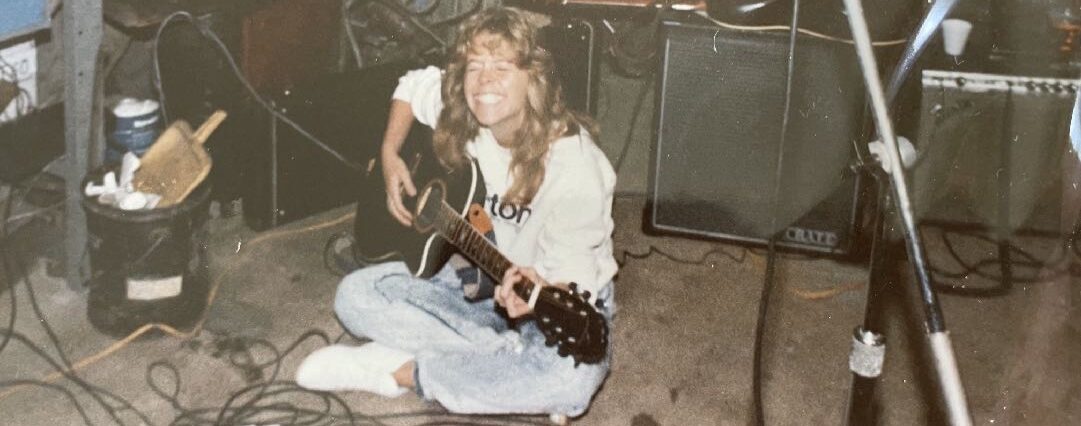
For at least a year, I spent my weekends gallivanting around with friends, often venturing into the local college town. Until one night when we almost drove head-first into an oncoming car, it never occurred to me that anyone was driving drunk.
I remember playing beer pong at Carnegie Mellon – the closest I ever got to “attending” the elite school. I’m not sure what kind of party it was, but I remember loving the combination of sports and alcohol. This meant that I didn’t have to speak to anyone – the music was too loud anyway – and I got to drink a lot.
We went to concerts, too, rushing the stage as was the custom back then. We saw the hugely popular Styx and Ted Nugent, and the less popular Axe and Tommy Tutone whose 8-6-7-5-3-0-9 stood the test of time way longer than any of us could imagine. I caught a backstage pass during Cheap Trick’s show and met the band afterward. Music was a solid backdrop to all of our events.
I don’t know when we started frequenting The Rocky Horror Picture Show, which played every weekend on Fridays and Saturdays, but this was an incredibly exciting time. We’d go to the bars beforehand, who served us long before the laws eliminated some of that underage drinking, and then we’d go to the show. For me, seeing the movie over and over again – screaming at the screen and delighting in the actors – was not only fun, it was almost comforting. I mostly knew what to expect.
I say “mostly” because one night I slugged my dear sister, Tracy, during the show. She did nothing to deserve it; I have no idea why I wasn’t able to communicate anger without fists in my youth. Drinking was already beginning to change me, and my family was beginning to feel the brunt of that change.
I went to parties at friends’ houses, too, which often involved drinking. I was particularly concerned about my friend Laura’s party because her dad was a pastor. I didn’t think there would be enough alcohol for me. But that party turned out to be a wild success, with alcohol flowing everywhere. I’ve often wondered how and why Laura’s parents didn’t destroy her for this event.
At another party, somewhere far from home, I remember only one piece of the evening: Robby. A high school freshman, maybe 15, Robby had long black hair that swooped over his eyes and made him look even younger. What I remember is Robby sitting in a porch chair, passed out and absolutely impossible to revive.
I stared and stared at him. His head lolled to one side, dried vomit covered the right side of his face. Robby’s baby eyes wouldn’t open and he didn’t appear to be breathing. I thought he was dead.
My friend, Bernie, who didn’t drink alcohol, assured me that Robby was alive. He laughed it off and told me that I should “just think of him as being asleep.” But Robby didn’t look like he was sleeping. I’d never seen anyone who looked so dead.
As an adult, I think back and wonder: why didn’t anyone do anything? Robby probably had alcohol poisoning; he could easily have choked to death on his own vomit. But I just stared at him.
I drank while I stared. I thought, he’s so young. At 17, I thought he was young.
Somehow, we all made it home alive.
One night, when my parents left for the evening, I went to the park to drink. With them gone, I had no fear of ramifications at home. I drank and drank and drank and drank.
There is a sense of lost time with every drunk episode for me – not because I was killing brain cells and blacking out, because that didn’t happen until way later. But with rare exception – say, when I kissed a boy I really liked – I remember every party as something like this:
I am walking into this party. I am scared. Where is the beer? A keg? Cool. Non-stop beer! I will drink one while I stand here by the keg, then I can fill up my cup again. Oh yuck, I hate beer. I won’t taste it if I drink it fast. Okay, second beer. I could probably mingle. (Takes one step away from keg) Just one more beer first. Okay, this is good. I am feeling better. I am less scared. I should talk to someone. I will wander over there and sit down. (Sits 30 feet away from everyone else) Good. I will just sit here and if someone talks to me, I can talk back. Plus I can see the keg from here so I’ll know if it’s running out.
My life wasn’t all “yay! drink! party! fun!” It was “need beer need beer need beer.”
This never changed.
So on that particular night, when the beer finally ran out or the cops broke up the party (whatever came first), I wandered back toward my house, 100% wasted but feeling safe from the wrath of my parents.
And then I saw their car in the driveway. My parents were already home.
I prepped my ridiculous story as I walked in, blurting something about a group of bikers chasing us all out of the park; I claimed I’d been running for my life.
My parents just stared at me.
Forty years later, I vividly remember the look on my mother’s face. It is a look that only a true addict can comprehend – a look that cuts deep without words. It leaves shame festering inside the heart for life. But it’s not a look of anger; it’s a look of terror and disappointment and agonizing concern.
My parents had gone to my mom’s high school reunion. They’d been having a great time and were headed to a friend’s house afterward. When they found me gone instead of caring for my little sisters as I probably said I would, they had to stay home. It’s a night that crushed my mom. I took that from her.
I took a lot from my parents. I took their confidence and their security and tossed them out a window. I drove stakes through their hearts with every stupid decision I made. I stole their comfort at night and replaced it with searing fear. I took their dreams and substituted the constant worry that I would be dead before morning. I took their sanity and their peace and their hope.
That night, for the first time, I saw what I was doing to them. I realized that my actions have consequences, that I could hurt other people with my behavior. It was the first time I knew, unequivocally, that my choices hurt my parents.
I decided not to care. It hurt me too much to care about them, and my pain was all that mattered.
That night didn’t stop me from drinking. The shame, in fact, spiraled into my downfall.
On special occasions, I weekended with my friend Paula to her home in Lake Erie. We’d hang out with all the other teenagers on the beach, drinking and laughing and playing loud music from a boombox. While I was still socially awkward and had no idea how to talk to people, these nights were good nights.
One night, after everyone else fell asleep, I stayed awake to watch a video that I’d seen in Paula’s parents’ collection: a movie called Days of Wine and Roses.
I had a special curiosity about this particular movie, because I was named after the lead character. Lee Remick played a woman named Kirsten, and my parents – who saw the movie at the theater – thought that name was beautiful.
So my name is Kirsten Lee.
With the old VHS player at hand, I watched Days of Wine and Roses, listening for my name. It was only uttered a few times, and even in the movie, no one ever pronounced it correctly. I rewound and rewound and rewound, every time they said, “Kirsten.”
At the age of 17, and in my drunken stupor, I didn’t really understand the movie. The old black-and-white flick was a bit dull by 1980s standards.
But the movie is about alcoholism.
Spoiler alert: if you haven’t seen the movie, I am literally about to reveal the ending. Of course, if you haven’t seen the movie in the past 60 years, chances are that you aren’t breathlessly waiting to know what happens.
At the end of Days of Wine and Roses, a very drunk Kirsten leaves her (now sober) husband and her newborn baby to become a full-time alcoholic. The character simply can’t – or won’t – stop drinking.
And I was named after her.
The irony was lost on me at 17; I was just trying to figure out how to pronounce my own name. Many years later, after I got sober, I watched the movie again. This time, it made so much sense! And it was so incredibly sad, watching Kirsten stumble away into the darkness.
Kirsten was trying to explain why she drank and said something that has stuck with me for decades. She said, “I want things to look prettier than they are.”
And as a sober adult, that’s the part I rewound over and over again. Because it hit on something I’d not previously understood. I drank because the things around me didn’t live up to my dreamy standards. I thought the world was spectacular and magical – and by middle school I realized that my idealized version of reality is … not real.
I still have issues with this. Ask my husband.
But I somehow got sober and the fictitious Kirsten stayed drunk.
So when Lee Remick, the actress, died of lung cancer, I took it to heart. I felt emotionally tied to this woman, whether or not it made any logical sense. And I quit smoking cigarettes – finally – just a few years after her death.
Sometimes people can beat the odds.
Roller skating provided me with my first long-term boyfriend. This excludes Bucky Johnson from seventh grade, who agreed to “go with me” on the last day of school – right before I moved and never saw him again.
Emmett was the real deal. He had long, wavy hair and deep brown eyes, and a voice even deeper than his eyes. He was also brilliant, which helped me sell this Catholic school boy to my parents.
I met Emmett at the rink but we started hanging out together at the new arcade, too. I excelled at Space Invaders. We’d play arcade games and then, since Emmett had a car, we’d head off to the local cemetery where I’d drink vodka from the bottle under Emmett’s seat, and he would smoke pot.
And then we’d make out. As was the case for many years, I put up with making out so that I could stay drunk as long as possible. At 16, I wasn’t interested in having sex; I wanted to wait for marriage. But one night there was no alcohol, so I smoked pot with him.
I wanted to understand the allure. Kids seemed to think marijuana was great but, after giving up pills in the tenth grade, I was adamantly against all drugs.
Still, drugs were easier to hide. My parents had busted me after drinking many times, so I thought it might be wise to switch to a less vomit-inducing alternative. So for several weeks, I smoked pot.
I hated pot. I hated smoking, which hurt my throat. I hated the way it made my head feel all fuzzy. I hated that it took away my ability to move my extremities when I wanted them to move. I hated everything about marijuana.
I felt like I was wasting my life, and sitting around in a dark cemetery smoking pot wasn’t my idea of a quality date. I really, truly despised this drug, so I quit. And it was easy to give up marijuana. I still went out with Emmett, and I still drank, but I no longer smoked. My anti-pot resolve lasted until long after I graduated from college.
I remember one especially awful evening when I came home, stone-cold sober because I’d quit smoking and Emmett couldn’t steal a bottle of liquor from his parents. My parents accosted me at the door. It was the first time in months that I’d gone out without consuming any alcohol or drugs.
“What are you on?” they queried. “We know you’re on something!”
“But I’m not!” I wailed. I couldn’t believe they chose this day to ask me about my drug use. I’d finally given up drugs, and now they wanted to know what I was doing? “I’m not doing anything!”
My parents didn’t believe me. I couldn’t convince them otherwise. But I couldn’t explain that I’d randomly given up marijuana in favor of underage drinking, either.
So I gave up on convincing them and just felt betrayed.
At about the same time, Emmett found another girl at the rink – a 14-year-old named Andi – who would have sex with him. So I felt betrayed by Emmett, too. All of my attempts to do the right thing were backfiring.
I started to think that maintaining a moral compass was my actual problem. Why continue trying to be good if I kept losing in the long run?
I love roller skating. I don’t remember learning to do it, but in middle school we had roller skating parties and I loved being out there, rolling around with everyone. I don’t understand the trend toward blading, or how skating rinks have gone away with drive-in movies. These are great past-times.
Roller skating – along with every other sport – is something I could do without drinking or drugs. I’ve had a theory for awhile now that my serotonin receptor is just broken – and that activities like softball and skating fix that reception. So who needs mind-altering chemicals when the activity is already fixing the brain? I sure don’t – and I am a sincere, severe addict.
But when the last song played and the DJ instructed all skaters: “Clear the floor, please. Clear the floor!” my life would return to the depressed state mixed with social anxiety that lives within me to this day. The lights would come on and people would head for the exits.
But I never wanted to leave. Fortunately, when I moved to Pittsburgh, one of my first friends was a girl whose dad owned the local skating rink. Paula introduced me to the people who worked at the rink – the DJ, the concession worker, the guy who took care of the skates.
So after everyone else left, Paula and I would hang around. And once everything was shut down for the night – somewhere around midnight, we would all head out for pizza … and beer. I was worried because it was illegal, but I was drinking with men of legal age who didn’t seem to mind that I drank from their pitcher. In fact, no one seemed to notice at all.
The whole crew would stay out until 3 a.m. or so, and then Paula and I would crash at her house.
These nights were fun – but once, a local celebrity – a real DJ from WDVE radio – showed up at the rink, signing autographs and hanging out. For awhile, he showed up at the rink regularly. Max was a kind of god in my mind, with a voice like chocolate butter. After school, I would sit by the radio and hang on every word he said, soaking in that voice, knowing he was “famous” and I’d been hanging out with him.
One night after skating, Max went out for pizza and beer. My crush was beyond ridiculous; I thought I was in love. Max was probably 30 years older than me and I’m not sure he even looked my direction that night. But we all laughed and drank, and I felt famous, too.
Max had been on the radio for years; then one day, right after the pizza-and-beer extravaganza, Max just disappeared. He just wasn’t on the radio one day. A week went by with no Max. I called the station but got no explanation. And Max didn’t show up at the rink again.
My heart was broken. I stared at my little autographed photo for months, crying. Somehow I believed that Max’s leaving had something to do with me. How I believed that …? Well, there’s no logic there. I was 16.
Max was just one in a long line of confused crushes I had. And I associated my “brush with fame” – and all of my fun – with beer.
I continued to skate; every Friday and Saturday, I laced up and raced out onto the floor. My social life evolved entirely from that rink. I wish I could have stayed and skated forever, with my serotonin fixed and stable, until I grew up enough to recognize my ignorance.
Experimenting with alcohol at the age of 15 was not really a cry for help; it was an attempt to figure out who I was without my parents’ influence. My school years were filled with poor attempts to be myself. I was always torn – and still am, sometimes – between who I thought I was, and who I thought I was supposed to be.
It’s impossible to explain to a teenager that it takes time to learn who we are – that “finding oneself” takes years, if not decades. It makes no sense, really, because we are all born knowing exactly who we are. Somehow, though, our concepts of who we are change over time; they are muddled by the input of others. And then we can spend the rest of our lives trying to sort out what muddling was productive and helpful, and what was not.
For me, my biggest question has always been: Am I okay?
I am pretty sure, deep down, that I am okay. I am not seeking reassurance. I am a decent human being.
But usually I am driven by a little internal dialogue that suggests, without fail, that what I do and say – always, even right now, as I write this blog post – is not okay. So trying to find out who I am, and then reassuring myself that I am okay, has been a lifelong journey.
When I was 15 … 18 … 23 … I truly, beyond-a-shadow-of-a-doubt believed that alcohol was going to help me get past all that. With the help of alcohol, I thought I could find myself faster. I could learn to reassure myself that I was okay before I went off the deep end.
Instead, I delayed every single chance I had for emotional growth. While my peers grew up, I stayed … young and stupid. Every drink I took kept me from facing my fears. Every drug I took kept me from dealing with my angst. Every single time I used something outside of myself to help me feel better, I ended up feeling worse.
This didn’t teach me a single thing; I spent year after year after year trying things outside of me to make me feel better. I expected people, relationships, cigarettes, drugs, alcohol – even chocolate – to fix me. I expected relocations, vacations, staycations and incantations to fix me.
They didn’t, and they don’t.
But so far, in all of these years, I have found exactly one thing – one – that actually makes me feel better.
I am hesitant to talk about it because, sadly, it’s gotten a bad rap over the years. It’s no longer okay to just say it. But if anyone ever reads this particular blog post and all they read is that nothing works… Well, that just wouldn’t be helpful. So I am going to admit the one thing that actually helps.
It’s prayer.
Wait, wait! Don’t stop reading! I am not a religious zealot. In fact, my understanding of God has nothing to do with religion. But when there is not one single thing in the world going right, I pray. When I am worried, I pray. When I am confused, I pray.
I basically just chat with God, because it helps to just chat. I don’t think what I believe about God even matters.
But prayer works. I mean, it works every single time. Suddenly, I will get the answer I am seeking. I will understand a little better. I will feel a little better.
And when things are really good? Well, I pray then, too. Because “thank you” is a really good prayer.
When I moved to Pittsburgh after tenth grade, I had no plans to continue my drinking and drugging career. Tenth grade had been kind of a disaster; I’d gotten in trouble for drinking, had a very boring time with pills, hated the way alcohol tasted, and didn’t want to continue on that path.
As happened every time I moved, I felt like I was going to get a fresh start in Pittsburgh. I always believed things would be different in a new place with new people. This time, I thought, I was going to do the right things for the right reasons. This time, I was going to be able to be myself. This time, the other kids were finally going to like me. This time, I would be popular.
I didn’t realize that being a square peg from birth affected my ability to fit in with any crowd. And that meant I would never, ever be included with constantly conforming “popular” kids.
So when I moved to Pittsburgh, I went back to doing the things I had enjoyed most in my childhood: going for walks, enjoying nature, and playing with dogs. It was summer time, which was very pleasant.
One day, I walked my dog to the nearby neighborhood park, a tiny place with swings, a slide and a soccer-sized field with a little gazebo in the corner.
Being a teenager, I was too old for the playground; I walked straight toward the field. I had to go around a little grove of trees to get to it – but as I rounded the corner, I nearly stopped dead.
A handful of teenagers were in the gazebo, one of them lumberjack-sized. Another one looked just like Matt Dillon – and later I learned his name was actually Matt. They were all boys.
And I was walking my dog straight toward them, intimidated by their size, beauty and camaraderie.
“Hey!” yelled the lumberjack. “Cute dog!”
“Thanks,” I squeaked. Unless intoxicated, I rarely spoke above a whisper.
“C’mon over here!” someone yelled, and since I had nowhere to hide, I continued to walk that direction. When I reached the group, I was literally shaking. I knew without yet being in school that these were the cool kids, and I had never been accused of being cool.
Oh, how I wanted to be cool!
Given my propensity for shyness and terror, though, I stayed less than three minutes. I had nothing to offer, no wit, no banter. I felt completely lost standing there. I answered their questions: yes, I was new to the neighborhood, how to pronounce my name, blah blah blah. It never occurred to me to ask them anything.
Then I politely whispered, “I have to get the dog home” and turned to go.
As I walked away one of them yelled, “Hey come back when it’s dark! We’re getting some beers!”
And that was a language I understood.
I turned around and gave them my best smile, which probably lasted one-tenth of a second. I gave my most enthusiastic wave, which probably meant my hand barely lifted out of its pocket.
And I knew then and there, I would be back later.
Sometime after dark, I wandered back to the park – this time without my dog. Still scared to death but dying for acceptance, I strolled up to the gazebo. When someone offered me a beer, I took it without another thought.
And I drank at every opportunity thereafter for a decade.
So I didn’t go to the river with Jeff. I went, instead, to an enormous last-day-of-school party. I was moving 300 miles away and this was my last day to party with my best friends.
I don’t even remember who was there – except for Mickey and Max, neither of whom were my friends.
I remember drinking lemonade mixed with whiskey in the school parking lot. They called it “Rockadade,” which sounded great to me. My head was spinning when I got to the house – whoever’s house it was – but I started drinking beer immediately. I equated “best time in the world” with “completely obliterated.” And like any good addict, I drank fast, just in case it ran out before I got my share.
I remember someone chanting – too late – “Whiskey on beer, never fear. Beer on whiskey, mighty risky!”
The chant implied that I was going to be sick, so I went to lie down.
I was sprawled, immobile, on a pile of coats on a bed when Mickey wandered into the room and closed the door. Mickey and I had a class together, but we’d never talked.
Without a word, Mickey dragged me to the edge of the bed and pulled off my shorts. He was unzipping his fly when – unbelievably – someone knocked on the door. Mickey yanked me off the bed, threw me in a closet, tossed my shorts at me, and shut the closet door. Then he left.
I was 15. My thoughts? He should have kissed me first.
Whenever I hear the words “me too,” I wonder whatever happened to Mickey.
Somehow I stumbled into a bathroom to vomit – and didn’t stand up again for the rest of the party. My “friends” didn’t seem to know I was missing. Probably I was there for hours.
Finally, someone came in and I blurted, “I need to talk to Max!”
Max was a guy with long, blond hair who hailed from the exotic state of Florida. I’d been following Max around school like a lost puppy for two years. We’d said maybe six words to each other but I’m pretty sure that every time he turned around at school, I was standing 10 feet behind him.
Another guy walked in and saw me cemented to the toilet. “Where’s Max?” I wailed. The guy ran away.
Several more people tried to use the bathroom without success, each time confronted by me raising my face off the bathroom tile just long enough to slur, “I need Max!” and then pass out again.
Eventually Max felt compelled enough to visit me during my finest hour. He stood there, looking at the ground. Overwhelmed with gratitude for his presence, I pushed my puke-coated hair out of my face and told him that I was never going to see him again because I was moving. I may have declared my undying love.
Perhaps I expected him to kiss me goodbye. Instead he said, “Okay. Well goodbye.” We did not touch.
I don’t remember how I got home, but I remember that my mother – somehow – knew that I had been drinking when I got there.
“How much did you drink?” she cried, appalled.
If someone had paid me a million dollars, I couldn’t have said how much I drank that day.
“Three beers,” I told her. This later became my standard response.
For the first time, I decided not to drink alcohol ever again. It had ruined a perfectly wonderful party! And I didn’t drink whiskey again for many years.
But I said “never again” a thousand more times before I actually stopped drinking.
When I moved to Blacksburg, Virginia, in the middle of 8th grade, I remember going to the school for the first time. It was after hours and the place was deserted.
Outside by the flag pole I saw the most beautiful boy I’d ever seen. His long dark hair flopped into his eyes as he looked up from the ground. Deep brown eyes met mine.
“Hello!” he said, smiling without abandon, emphasizing the “-lo!” It is obvious now – not then – that he thought I was cute.
His smile was perfect. With teeth like that, I thought, that boy could be a movie star.
I eeked out a tiny “hi” before thrusting my eyes back at the ground. He tried to have a conversation but no matter how welcoming his greeting, I couldn’t respond appropriately.
Years went by, and Jeff stayed gorgeous. He waved at me sometimes, which I never understood. I stared at him from afar, wandered around behind him watching that long hair, waiting for that breathtaking smile.
Jeff was much cooler than me. Our paths didn’t cross; we didn’t have the same friends.
I knew I was moving after 10th grade – which rattled me to the core – so I planned on making my last day of 10th grade unforgettable. I was going to a party!
I was cleaning out my locker for the last time when Jeff appeared behind me.
“Hey,” he said, and I turned around. Those eyes, I thought.
He smiled at me.
“Hey,” I eeked.
I was wearing a halter that tied in front and Jeff reached casually for the tie on the halter as he moved closer. He twirled it in his fingertips, looking right into my eyes as he spoke.
“So a bunch of us are going to the river after school…” Oh my god that voice.
“Cool,” I said, trying to be cool.
“You wanna come with us?” That hair, oh my god – and the river! Being invited to the river was a rite of passage; in more than two years, no one had ever invited me anywhere, let alone to the cool-kid hangout place.
But today, I’d been invited somewhere else, too.
“I can’t,” I said. “I’m going to a party.” At the time, I just wanted to ensure that alcohol would be forthcoming. It was the last day of school; I had to have alcohol.
“Come with me instead,” Jeff said. “It’ll be fun.” He never stopped twirling the tie on my halter. I could barely look at him so close to me. His breath was warm.
“I have to go to this party,” I said. People were waiting for me in the school parking lot; they had whiskey.
Why TODAY?!? I wanted to scream. Why couldn’t you have asked me out even one day earlier? Why did you wait two and a half years?!
“Are you sure?” he said. My eyes, my melting body, could not have sent more mixed signals.
“Yeah, sorry,” I said.
“Okay,” he said, finally dropping the halter tie. “See ya later.”
And Jeff was gone. I never saw him again.
In my innocence, I didn’t recognize that Jeff wasn’t interested in my sparkling personality. I was a mouse-quiet virgin with no clue. The river could have been great fun, but I’m guessing it would have been a less-than-stellar experience for me.
I will never know.
But I’m pretty sure that saying no to Jeff was one of the best choices I ever made.
My friend, Sherry, and I went to see Toto in concert at Virginia Tech when we were in 10th grade. I have tried to verify this online, but I can find absolutely no proof that this concert ever happened.
I remember it well, because it was my second time drinking.
Sherry and I met beforehand somewhere on campus, then headed for a local restaurant that sold alcohol. We stood outside for almost an hour asking those of legal age to buy us some beer. Finally we acquired a six-pack.
We clutched our beers and ran to a dark corner somewhere outside of the throngs of people headed into Burruss Auditorium to see Toto. We didn’t want to be late for the show, even though our tickets were in the very last row, so we drank our three-beers-each as fast as humanly possible.
As 15-year-olds, we didn’t know that drinking faster ensured that we’d be roaring drunk in a matter of minutes. After my first time drinking, in fact, I had no idea what “roaring drunk” meant.
We could barely walk when we presented our tickets. As we found our seats, the show started – causing the crowd to jump to their feet and explode in applause. As wobbly as we were, we couldn’t sit down in our chairs.
We stumbled into each other and into the people around us, trying to see over the people in front of us. We fell frequently into two laughing college freshmen – John and Jim – whose seats were by ours. Eventually they encouraged us to rush the stage – which we did. This behavior was unofficially allowed at concerts in the prior century.
Two hours earlier, I would never, ever have left my seat. I would have stayed in the last row, unable to see, then complained for weeks – or years – afterward.
Instead, Sherry and I landed next to the stage screaming, jumping up and down, waving our arms and singing along at the top of our lungs. I felt free for the first time in my entire life; I had zero inhibitions.
I was on top of the world. I stood squashed among the college students, feeling “part of” the crowd for the first time in my life. Alcohol had done for me what I could not do for myself. It made me feel like I belonged where I was, like I was okay in my own skin, for the first time ever.
John and Jim invited us back to their dorm room after the concert, and we went with them as our initial buzz started to wear off. Once there, we revived ourselves by drinking champagne and making out to the Eagles’ Hotel California, which the boys played on repeat. Every time the appropriate part of the song rolled around, the boys would raise their glasses and roar: “… PINK CHAMPAGNE ON ICE!” For all I know, there were mirrors on the ceiling, too.
Eventually, Sherry and I went home, where our wild night came to an end. And I finally understood that “drunk” meant more than “drinking.” It meant I could do whatever I wanted, because I would finally feel free to be the person I’d always wanted to be.
I had no idea that, simultaneously, alcohol started to destroy the person I’d always been in order to make room for the person I wanted to become. The new person I envisioned was nothing like the sweet, shy, kind, vulnerable, sensitive girl I’d always been.
I wanted to become … invincible.
I didn’t realize then that alcohol would destroy the new person, too.